Introduction
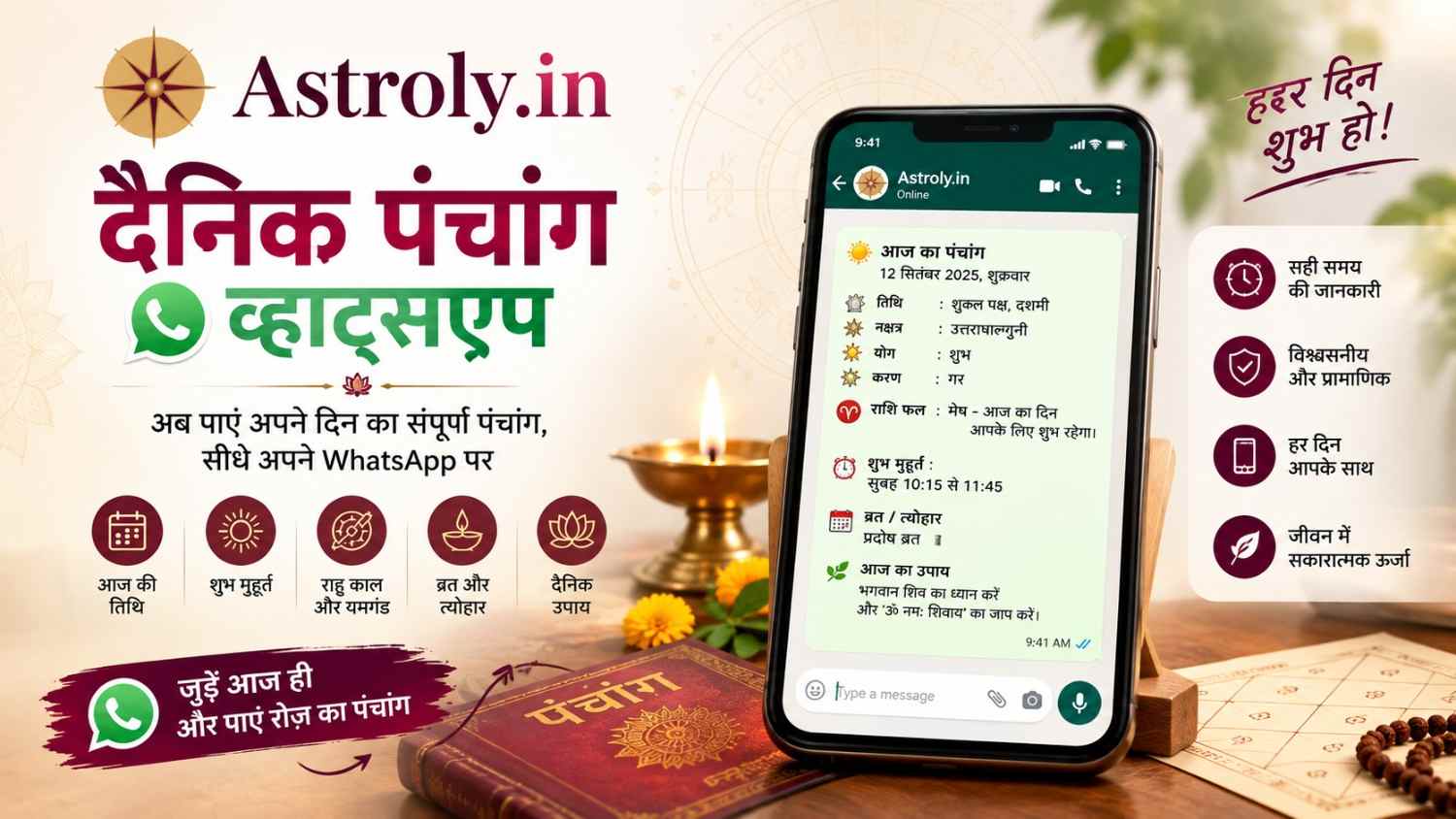
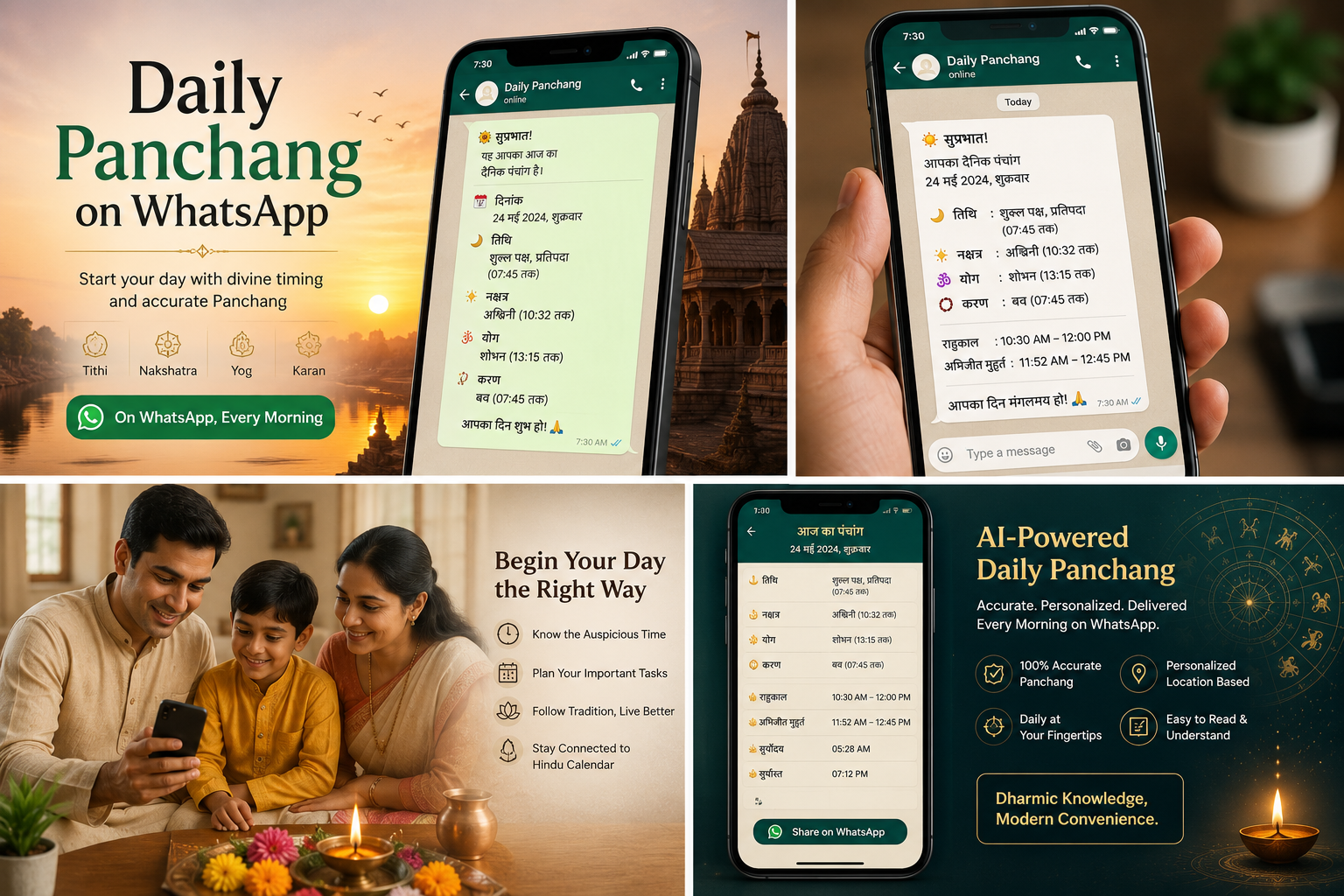
Somewhere in your house, right now, there is a person who knows exactly what tithi it is. Maybe it's your mother. Maybe it's the neighbor aunty who reminds the whole lane about Ekadashi. For everyone else, the Hindu calendar has always been a beautiful mystery—important, ever-present, and completely unreadable. Panchang on WhatsApp changes that equation: one morning message, and the mystery becomes a habit.
Think about what the panchang used to demand. A thick annual book in small print. A temple noticeboard you'd have to walk to. A pandit on speed dial. The information existed, but it never came to you—you went to it, usually after you'd already needed it. The fast kept a day late. The travel planned is bang inside Rahukalam. The festival was discovered through someone else's forwarded good-morning image.
The fix turned out to be embarrassingly simple: send the day's calendar to the app people already check fifty times before lunch. No new app to remember. No website to bookmark. Just the tithi, the muhurat, the festivals—arriving like clockwork. This guide covers what the panchang contains, why the WhatsApp version works so well, how to read it in two minutes flat, and how to get the panchang on WhatsApp from Astroly, for free.
The Five Things Your Morning Message Carries
Panchang literally means "five limbs." Five measurements that, taken together, describe the texture of a day. You don't need a degree to use them—you need about ninety seconds and this section.
Tithi—which lunar day is it?
The moon's phase, counted as days: Pratipada to Purnima going up, then back down to Amavasya. Fasts live on tithis—Ekadashi, Purnima, Amavasya, and the Chaturthis. The message names today's tithi outright, which quietly kills the most-asked question in Indian households: "Aaj kya hai?"
Vara and nakshatra—the day's flavor
Vara is just the weekday, but paired with the nakshatra—the lunar mansion the moon sits in—it gives the day its character. Twenty-seven nakshatras rotate through the month, each with a traditional temperament. The message distills this to a line: a day for beginnings, a day for routine, a day to keep your head down.
Yoga and karana—the fine print
Two more technical layers that sharpen the picture. Particular yogas are prized for new ventures; particular karanas are avoided for important work. You'll rarely need to think about them directly. But on the mornings when the message flags a rare, excellent combination—or a genuinely bad one—you'll be glad someone did the math.
What actually matters daily
Honestly? Three lines: the tithi, the one-line day read, and the muhurat timings. Everything else is depth for the curious. A good daily message is layered like that—essentials shouting, details whispering. Read from the top and stop when you're informed.
A quick glossary for the message
You'll meet a few terms repeatedly, so here's the cheat sheet. Shubh muhurat: a favorable time window. Rahukalam: the day's avoid-fresh-beginnings stretch. Abhijit muhurat: a short midday window considered good almost daily. Gandmool: specific nakshatra junctions flagged for newborn-related rituals. You don't need to memorize these—the message explains the ones that matter each day. But recognizing them turns every panchang on WhatsApp message from a notice into a briefing.
Panchang on WhatsApp: Why It Won the Race
Plenty of formats tried: books, wall calendars, TV tickers, apps, and websites. The messaging app beat them all, and the reasons are worth knowing—they tell you what to demand from any service.
Zero effort, zero forgetting
Every other format required you to remember. The book needed opening. The app needed tapping. The website needed visiting. The message needs nothing—it arrives, it sits at the top of your chats, and it gets read between the good-morning forwards. The panchang finally stopped relying on your memory and started relying on your habits.
Plain language or nothing
The old panchang spoke in ghatis and palas. The WhatsApp version speaks in clock times and plain sentences. "Shubh muhurat: 9:40 AM – 12:15 PM" beats a paragraph of astronomical notation for every purpose except impressing pandits. If a service sends you the old notation without translation, it's a museum piece, not a tool.
The family group effect
Nobody predicted this, but it's the loveliest part: the daily panchang became forwardable. It lands in family groups. Someone's father reads out the muhurat at breakfast. Festival eve discussions start from the same message. The calendar stopped belonging to one knowledgeable person and became household infrastructure.
The formats it replaced
Consider the defeated competition. The annual book: comprehensive, authoritative, and open perhaps six times a year. The wall calendar: tithi printed microscopically, muhurat absent. The TV ticker: gone in seconds. The astrology app: installed with enthusiasm, opened twice. Each failed the same test—availability at the moment of need. The daily message passes because it doesn't ask to be remembered; it simply shows up, the way the newspaper used to.
Four questions before you subscribe
Is it genuinely free, or does "free" expire? Does it arrive every single morning, festivals included? Is it calculated for your city—because sunrise in Kochi and Jaipur is not the same sunrise, and muhurat follows the sun? Is it written for humans? A yes on all four is the bar for any panchang on WhatsApp service. Anything less and you're back to the beautiful mystery.
Your Two-Minute Morning Routine
Here's how to actually use the message. Two minutes, once, before the day starts moving. This tiny routine is what separates people who get panchang on WhatsApp from people who benefit from it.
Minute one: what's today?
Read the tithi line. Festival? Fast? Nothing special? If something's tomorrow, today's message warns you—that advance notice is the single most loved feature, because festival prep happens the evening before. One glance and you know whether today is ordinary or observed.
Minute two: when to do things
Check the muhurat windows and rahukalam. Good hours, listed plainly. The day's rahukalam—about ninety minutes best avoided for fresh beginnings—marked clearly. Got one important thing today? Now you know when to do it. People who receive panchang on WhatsApp daily consistently say this is the minute they'd never give up.
The evening-before habit
Here's a pro move: Read tomorrow's festival note tonight. Ekadashi fasting, Purnima rituals, and Sankranti preparations—they all go smoother with a few hours' notice. The message gives you that notice. Use it, and you'll stop being the person who finds out about Karva Chauth from a colleague's mehendi.
Using Muhurat and Rahukalam Without Losing Your Mind
The data is only half the story. The other half is proportion—and most panchang anxiety comes from getting the proportion wrong.
Muhurat is a tailwind, not a teleport.
A good muhurat supports a beginning; it doesn't guarantee it. Sign the papers in the shubh window, by all means—but sign prepared papers. Launch in the good hour—with a finished product. The panchang improves timing. Your effort still does the heavy lifting. Anyone who tells you otherwise is selling something.
Rahukalam is a suggestion, not a siren.
Ninety-ish minutes a day, shifting by weekday, traditionally kept free of new beginnings. That's the whole of it. Keep working, keep living, keep your appointments—just start the big new thing before or after when it's easy to do so. Treating rahukalam as a daily emergency is like treating a yellow traffic light as a roadblock.
Festival alerts are the real prize.
Ask long-time subscribers what they'd miss most, and the answer surprises newcomers: not the muhurat, the reminders. Ekadashi dates. Pradosh. Purnima vrat. The regional festivals your office calendar never heard of. Each arriving the evening before, with a line on what the observance actually involves. For busy households, this alone justifies the subscription.
For the sceptics in the family
Every family has one, and the panchang has something for them too: rhythm. A daily prompt to look at the day's shape. A weekly nudge to place important work thoughtfully. A yearly structure of festivals that gives the months texture. You don't need belief to benefit from a well-organized calendar—you just need mornings. Plenty of panchang on WhatsApp subscribers describe themselves as "not that religious" and stay for the organization alone.
Getting It from Astroly
So what does the Astroly version actually do? Three promises, kept daily.
Every morning, without fail
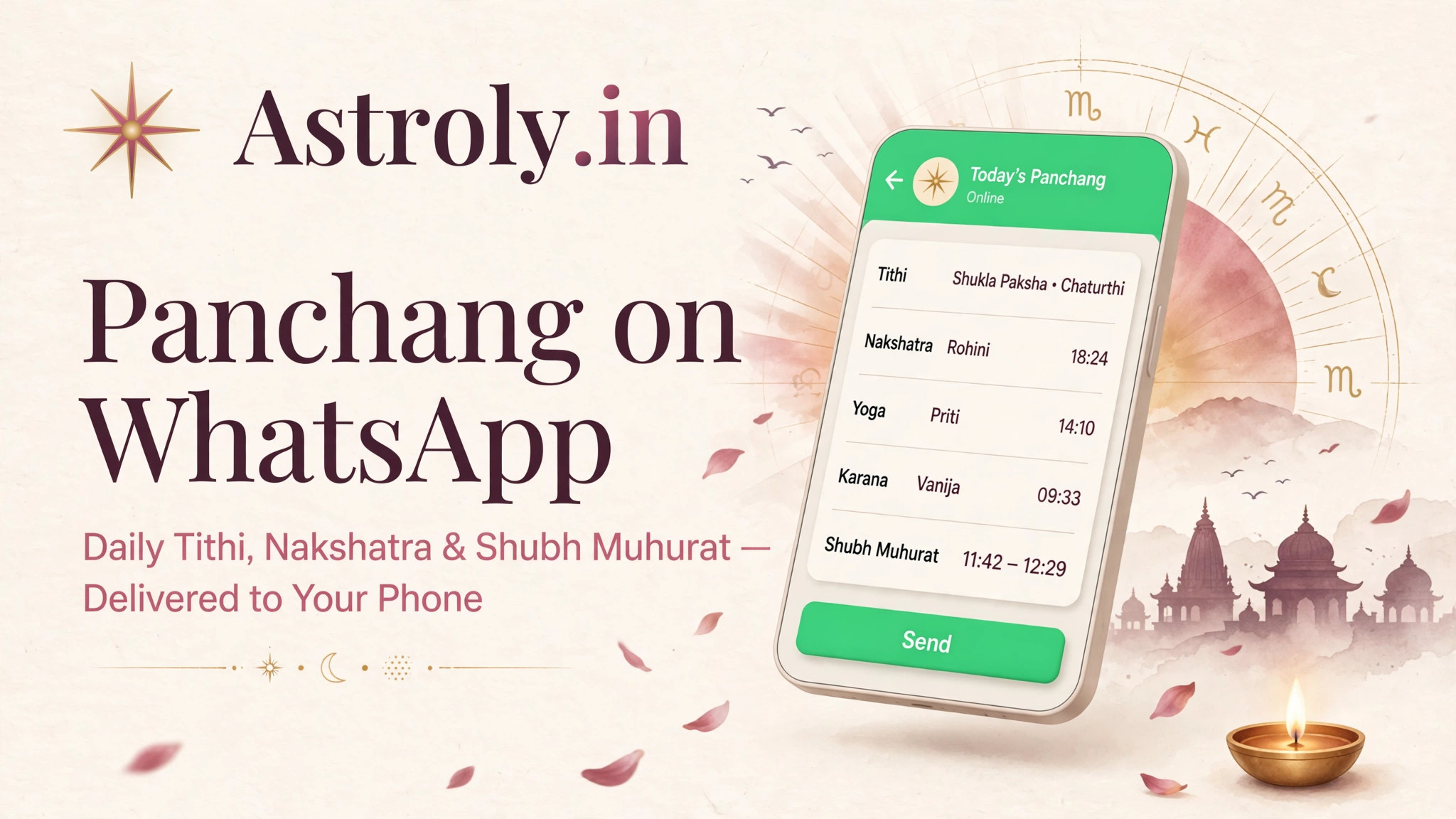
One message. Tithi, nakshatra, yoga, and karana in plain words. Shubh muhurat as clock times. Rahukalam marked. Festival and fast alerts with a one-line explainer. Sunrise and sunset for your city. Plus special alerts—eclipses, adhik maas, the big festivals—that you want pushed to you, not stumbled upon.
Your city's sky, not a national average
Worth repeating because most services skip it: muhurat is computed from sunrise, and sunrise moves across India. A single national panchang is wrong everywhere by a little. Astroly calculates for your location, so the times in your message match the sun outside your window.
Free and readable by everyone
No paywall, no trial countdown. And the language is written for the whole house—the grandmother who knows the old terms, the teenager who doesn't, and everyone in between. Sanskrit where it belongs, plain words everywhere else. That's the standard a panchang on WhatsApp service should be held to, and it's the one we hold ourselves to.
When you want the full calendar
The morning message is the essentials. For the rest—the month view, muhurat search by purpose (weddings, griha pravesh, new vehicle, naming ceremonies), the year's festival list, and personalized features—there's the app. The two are built as a pair: a message for the morning and an app for the planning. Download the Astroly app for daily updates and carry the whole system in your pocket.
Frequently Asked Questions
Does it cost anything?
No. Astroly's panchang on WhatsApp is free—every morning, no trial, no card, no catch. One daily message with the tithi, muhurat, rahukalam, and festival alerts. If anyone ever asks you to pay for a daily panchang message, that's a different business model, not a better calendar.
When exactly does it arrive?
Early morning, while the day is still being planned—tithi, muhurat, and rahukalam in your hands before the household starts moving, not after.
Will the timings match my city?
Yes. The calculations use your city's sunrise and sunset, because muhurat shifts with longitude. A panchang that ignores location is decoration.
What if I'm not religious?
You'll still get the planning rhythm, the festival reminders (useful socially if nothing else), and the satisfaction of knowing what tithi it is when your mother asks. Plenty of subscribers file themselves under "culturally interested" and never leave.
Can I share it with family?
Please do. Forward it to the family group—that's where these messages seem to be happiest. One subscription informing a whole household is the entire point.
Message or app—which should I use?
Both, honestly. The message is the two-minute morning briefing. The app is the full calendar with muhurat search, festival lists, and personalization. Start with the message; add the app when you want more.
Conclusion
For centuries the panchang was the most respected unread document in the Hindu household. The information was perfect, and the delivery was broken. One morning message fixed the delivery—and suddenly the calendar your grandmother consulted is the calendar you check with your chai. That's the quiet revolution of panchang on WhatsApp: tithi, muhurat, festivals—not as scholarship, but as habit.
Make it your habit starting tomorrow. Get panchang on WhatsApp from Astroly—free, daily, timed to your city's sunrise, written for real humans. And download the Astroly app for daily updates—the complete calendar, muhurat search, and festival lists every single day.