
My grandmother had a ritual. Every morning, before the chai even boiled, she would open the tattered Panchang booklet kept near the mandir and read the day aloud. Tithi, nakshatra, Rahu Kaal. She planned her whole day around it. Weddings, travel, even when starting the pressure cooker for a big family lunch—everything had its muhurat.
Fast forward to today. Most of us don't have a Panchang booklet. Half of us wouldn't know where to buy one. But here's the thing: the wisdom hasn't gone anywhere. It's just moved. A daily panchang on WhatsApp is basically my grandmother's morning ritual, repackaged for the smartphone generation. Same trusted Vedic calendar. Same five elements. It just lands in your chat instead of a booklet.
And honestly? It works. Because let's face it, you check WhatsApp before you even get out of bed. So why not have today's tithi, nakshatra, and shubh muhurat waiting for you right there?
In the next few minutes, I'll walk you through what a Panchang actually is (no astrology degree needed), what your morning message will contain, and how to start getting a daily Panchang on WhatsApp for free through Astroly. I'll also tell you about the Astroly app, because if you like the WhatsApp updates, the app takes it to another level. Download the app and you'll get the full experience with personalized alerts and a complete festival calendar.
So, What Exactly Is a Panchang?
Forget the complicated explanations. A Panchang is the traditional Hindu calendar, and it's been around for thousands of years. The name itself is simple: "pancha" means five, and "anga" means parts. Five parts that together describe what kind of day it is, astrologically speaking.
The Five Parts, in Plain English
Think of the Panchang like a weather report, but for cosmic conditions. It tracks five things:
Tithi, the lunar day. This is what decides when festivals fall. Diwali, Holi, and Ekadashi—they all depend on the tithi.
Nakshatra, the star constellation the Moon is passing through. There are 27 of them, and each carries a different energy.
Yoga, a combo of the Sun's and Moon's positions. Some yogas are great for starting things. Others, not so much.
Karana, basically half a tithi. Astrologers use it to fine-tune the exact right moment for important work.
Vara, the weekday. Each day of the week is ruled by a planet, which is why Tuesdays and Saturdays have their own reputations.
That's it. Five measurements, and together they tell you whether today is a "go for it" day or a "maybe wait till tomorrow" day.
Why Our Parents' Generation Swore By It
Here's something most people don't realize. The Panchang was never meant to be some mysterious priest-only document. Regular families used it for everything. When to travel. When to start a business. When to get married. When to do Griha Pravesh. My own parents checked it before booking flight tickets, no joke.
The problem was access. You needed the booklet, or you needed to know a pandit, or you had to squint at a tiny calendar on the wall. A daily panchang on WhatsApp removes all of that friction. The knowledge is the same. The delivery is just... smarter.
Why WhatsApp, Though? Why Not Just Google It?
Fair question. You could Google "today's panchang" every morning. But will you? Every single day? Probably not. And that's exactly why the WhatsApp format wins.
It Meets You Where You Already Are
Be honest. What's the first app you open in the morning? For most Indians, it's WhatsApp. Family groups, good morning forwards from relatives, work messages. Your daily panchang on WhatsApp just slides right into that routine. No new habit to build. No app to remember to open. It shows up, you glance at it, and you're done in 30 seconds.
Even Your Parents Can Use It
This one's personal. My father can barely manage to update his apps, but he navigates WhatsApp like a pro. For older family members who aren't comfortable downloading new apps or browsing websites, WhatsApp is familiar territory. Subscribe once, and the Panchang keeps coming. They can even forward it to their own groups and feel like the tech-savvy one for a change.
It Works When the Internet Doesn't
Train journeys. Remote villages. Patchy network areas. WhatsApp messages download in the background and stay on your phone. Your morning Panchang is readable offline, searchable later, and easy to forward. Try doing that with a website you have to reload.
What's Actually Inside the Morning Message?
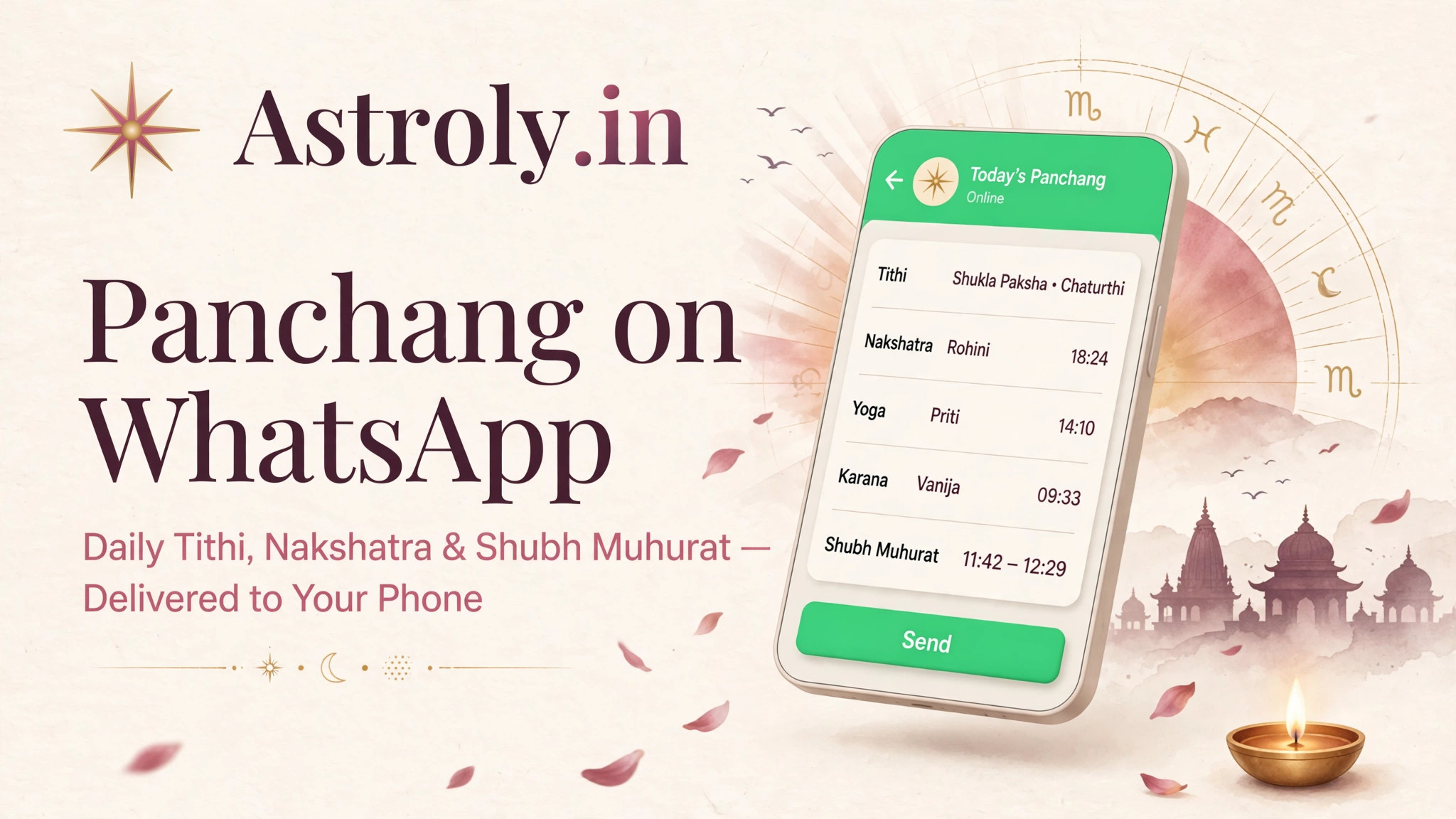
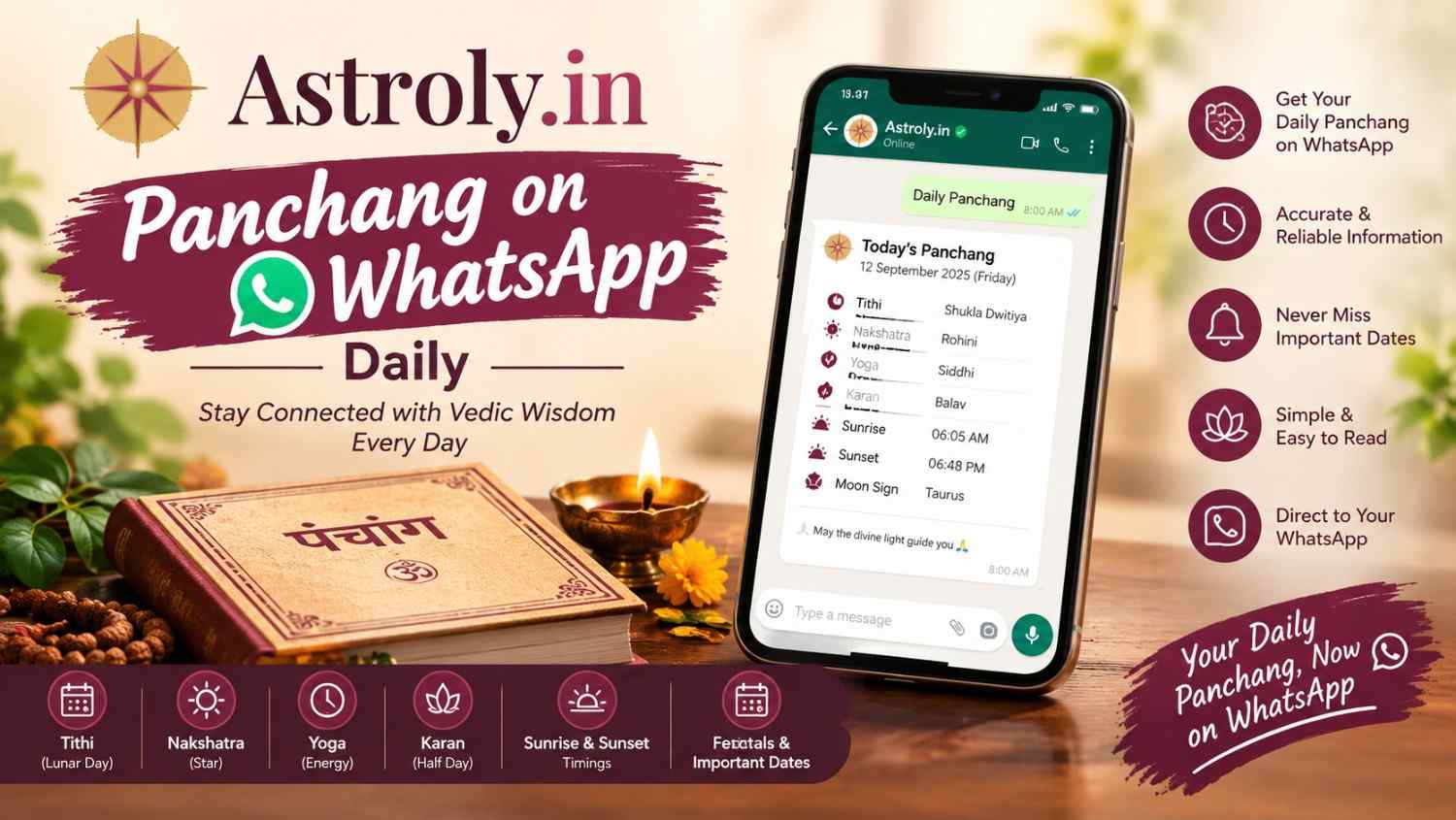
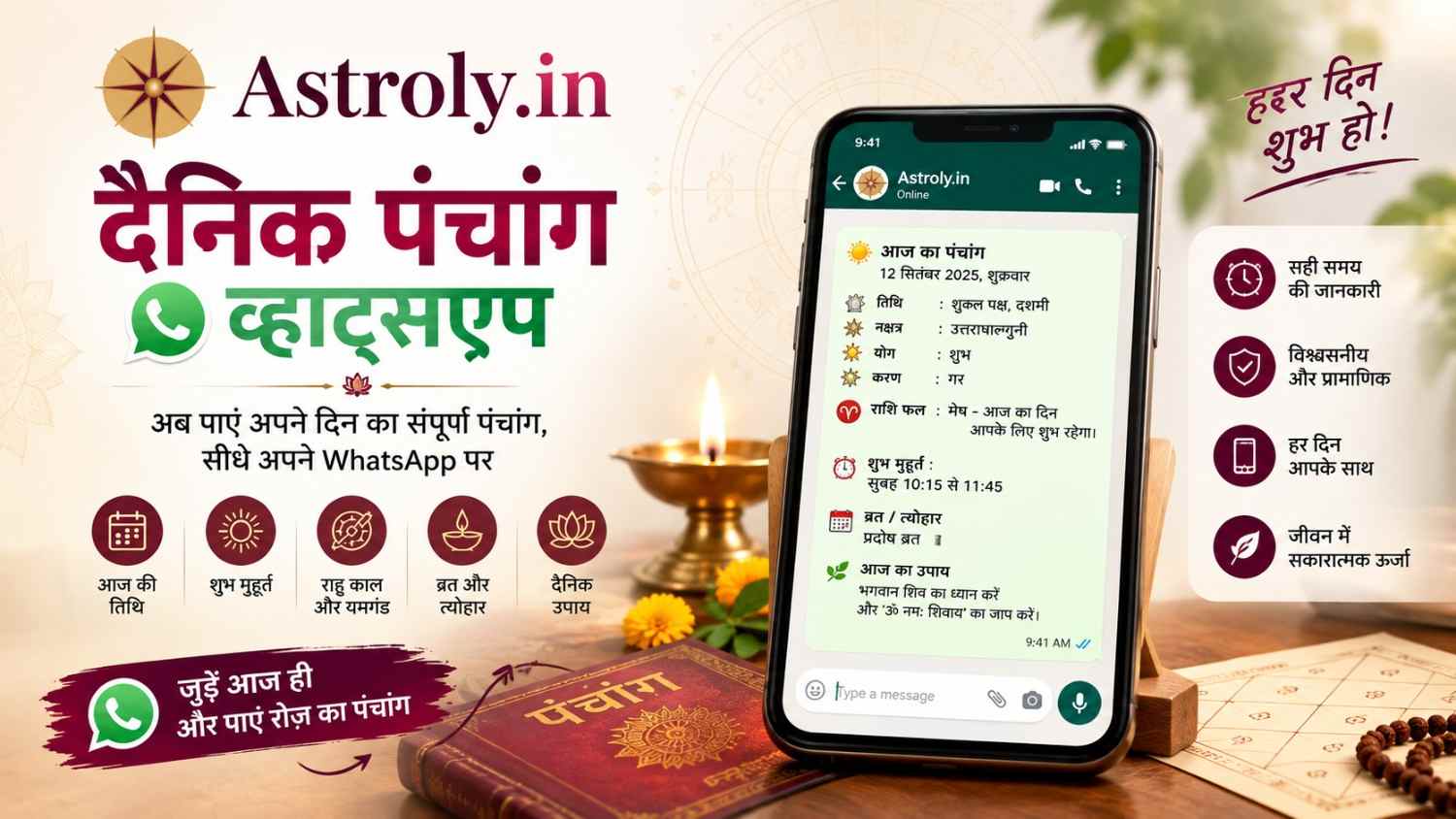
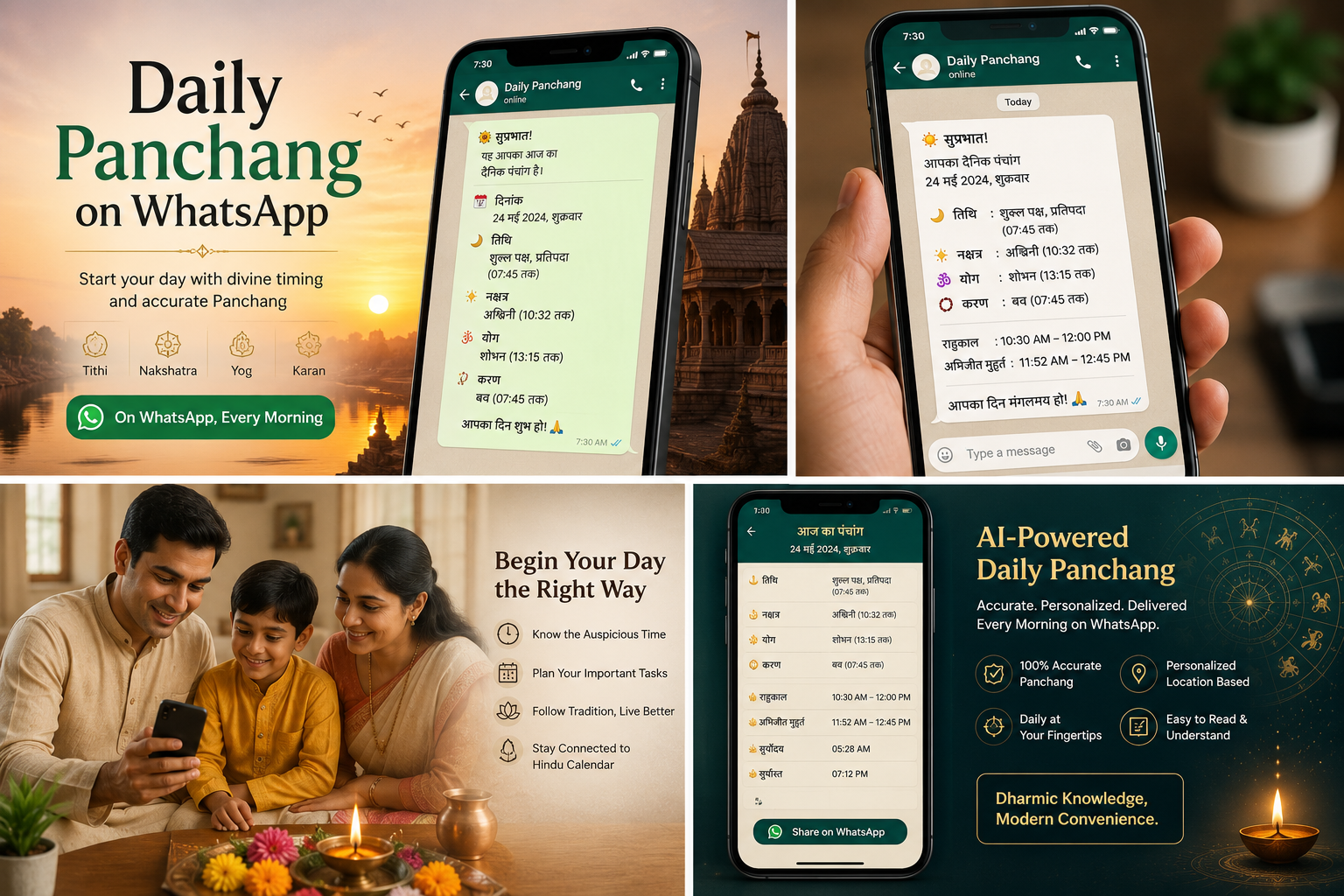
Okay, so what do you get? A good daily panchang on WhatsApp message is like a well-made thali: small portions, everything you need, nothing wasted. Here's what's typically on the plate.
Tithi and Nakshatra, With Timings
You'll see today's tithi, something like Shukla Pratipada or Krishna Chaturdashi, along with when it starts and ends. Same for the nakshatra. These two lines alone tell you whether it's a fasting day, a festival day, or just a regular Tuesday.
Shubh Muhurat and Rahu Kaal
This is the part everyone scrolls to first. The message highlights the day's auspicious windows, like Abhijit Muhurat, and flags the periods to avoid, mainly Rahu Kaal and Yamaganda. I'll be honest, even sceptics I know quietly avoid Rahu Kaal for big meetings. Old habits, right?
Sunrise, Sunset, and Moon Timings
Precise to the minute, calculated for your location. This matters more than people think. Muhurat timings genuinely shift from city to city. A Panchang calculated for Delhi won't be perfectly right for Chennai. That's why location-based accuracy matters, and it's something Astroly handles properly using established Vedic astronomy methods, cross-checked against respected references like Drik Panchang.
Festival and Vrat Reminders
Ekadashi sneaking up on you? Pradosh tomorrow? Purnima this week? The daily message flags these so you're never caught off guard. During festival season, this feature alone is worth the subscription. No more realizing it's Karwa Chauth when your neighbor mentions it.
How to Start Getting It (Takes Two Minutes)
Alright, the practical part. There are two ways to get your daily panchang on WhatsApp, and both are free.
The Website Route
Head over to astroly.in. Look for the Panchang or WhatsApp updates section, enter your details, and you're set. From the next morning, the Panchang starts arriving in your WhatsApp. That's genuinely all there is to it.
The App Route (My Recommendation)
Here's my honest take. The WhatsApp messages are great, but they're the trailer. The full movie is the app. Download the Astroly app and you get everything: the complete daily Panchang, your personalized horoscope, a full festival calendar for the year, and custom alerts for muhurats that matter to you. Plus, you can still get the WhatsApp delivery alongside it.
It takes about a minute to install, and it's free. If you're even slightly interested in Vedic astrology or just want to stop missing festivals, it's worth having on your phone.
Download the Astroly app on Google Play.
Set your city once, and every timing—sunrise, muhurat, Rahu Kaal—gets calculated for exactly where you live. That's the kind of detail that separates a casual forward from a real Panchang.
Who's This Actually For?
You might be thinking, "This sounds nice, but is it for someone like me?" Let me paint a few pictures.
If you run a household, you know the drill. Pujas to plan, fasts to observe, and functions to schedule. Having the tithi and festival alerts land on your phone each morning quietly removes a hundred small decisions. Forward it to the family group, and suddenly everyone's on the same page.
If you're in business, timing matters to you more than you'd admit. New venture, big deal, product launch. Plenty of successful business owners check the muhurat before pulling the trigger. A morning Panchang message gives you that edge without a daily call to your astrologer.
If you're a student or job hunting, exam dates and interview days feel less random when you know the day's energy. Is it foolproof? Of course not. But starting your UPSC prep on a shubh muhurat? It certainly doesn't hurt, and it gives you a psychological boost.
If you're a pandit or practicing astrologer, you already know all this. But even professionals like having a quick, accurate daily reference in their pocket during consultations. Think of it as a cheat sheet you didn't have to make.
The point is, a daily panchang on WhatsApp isn't some niche thing for the deeply religious. It's for anyone who likes the idea of starting the day with a little more awareness and a little more intention.
Questions People Actually Ask
Is it really free?
Yes, genuinely free. The daily WhatsApp Panchang costs nothing. The app is also free to download, with plenty of features unlocked from day one.
What time does the message arrive?
Early morning, before your day properly begins. Exact timing can vary a bit by region, but it's designed to be there when you wake up.
Will the timings match my city?
They should, as long as your location is set correctly. This is important because sunrise, sunset, and muhurat timings genuinely differ across India. When you download the app or sign up on the website, make sure your city is selected.
Can I share it with my family group?
Please do. That's half the fun. Most subscribers forward the morning Panchang to family and community groups. It takes two taps.
What's the difference between the WhatsApp version and the app?
Think of WhatsApp as the daily headline and the app as the full newspaper. The message gives you the essentials. The app adds your horoscope, detailed muhurat breakdowns, personalized alerts, and the whole year's festival calendar. Best combo? Both. Get the WhatsApp updates for convenience, and download the app for depth.
I'm not really into astrology. Is this still useful?
Honestly, yes. You don't need to believe in anything. At minimum, you'll never miss a festival or vrat again, and you'll know the basic rhythm of the Hindu calendar. Plenty of subscribers treat it as a cultural calendar rather than an astrology tool.
The Bottom Line
Look, nobody's saying a Panchang will change your life overnight. But there's something quietly powerful about starting your day with awareness. Knowing today's tithi. Knowing when the good hours are. Knowing that Ekadashi is coming so you can plan for it.
A daily panchang on WhatsApp takes a tradition that's thousands of years old and fits it into the 30 seconds between your alarm and your first chai. No effort. No cost. Just ancient wisdom, delivered modern.
So here's what I'd do if I were you. Go to astroly.in and subscribe to the free WhatsApp updates. And while you're at it, download the Astroly app for the complete experience, horoscope, festivals, personalized muhurat alerts, and everything in one place:
Download the Astroly app on Google Play.
Tomorrow morning, when that first Panchang message arrives, you'll wonder why you didn't start sooner. My grandmother would approve.