Most of us check WhatsApp before we check anything else in the morning. Before the news. Before email. Sometimes before we even get out of bed. So what if that first glance at your phone could actually tell you something useful — not just "good morning" forwards and memes, but whether today is a good day to sign that deal, start something new, or simply fast?
That is the idea behind Panchang on WhatsApp. And once you try it, you will wonder how you managed without it.
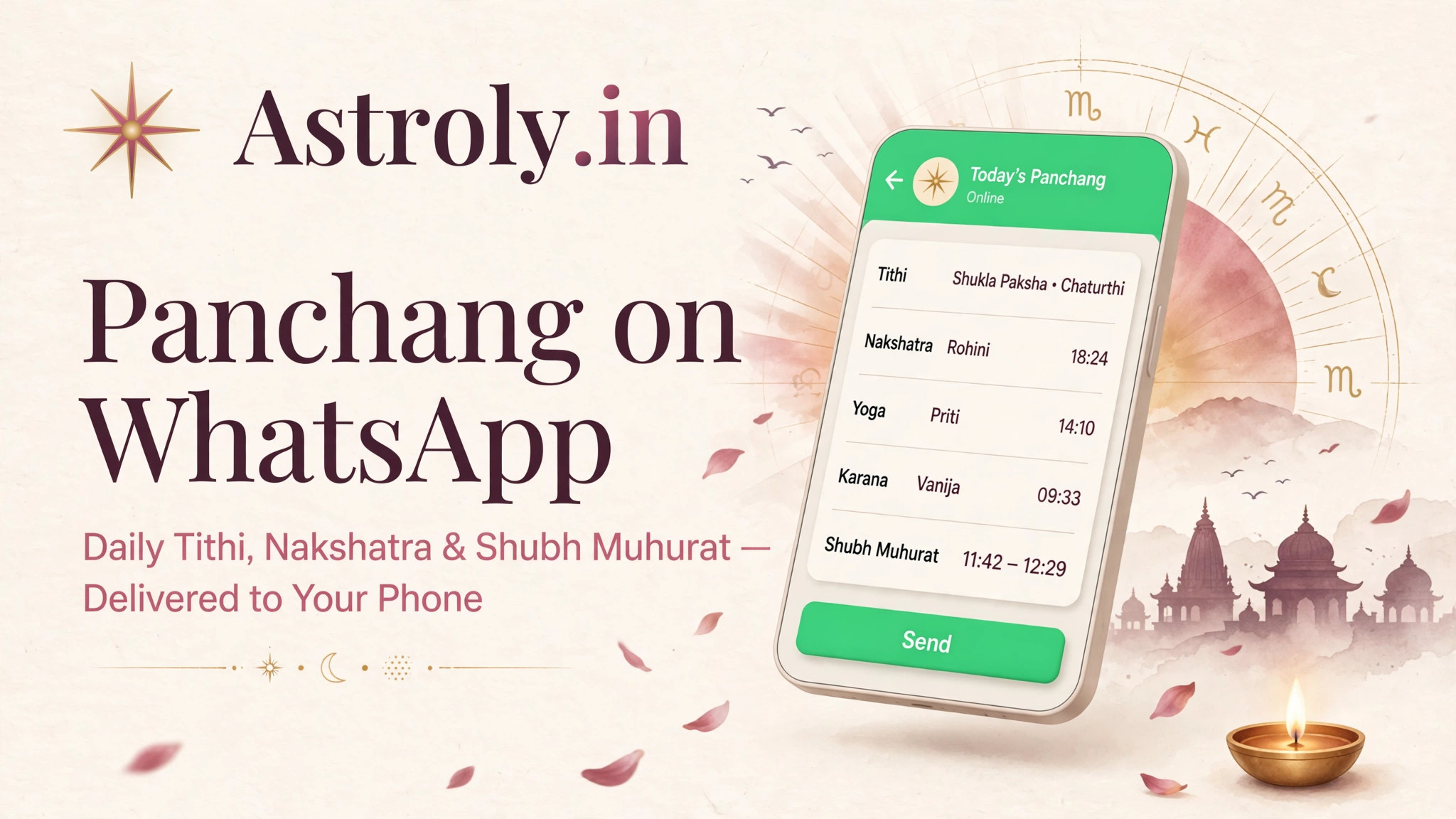
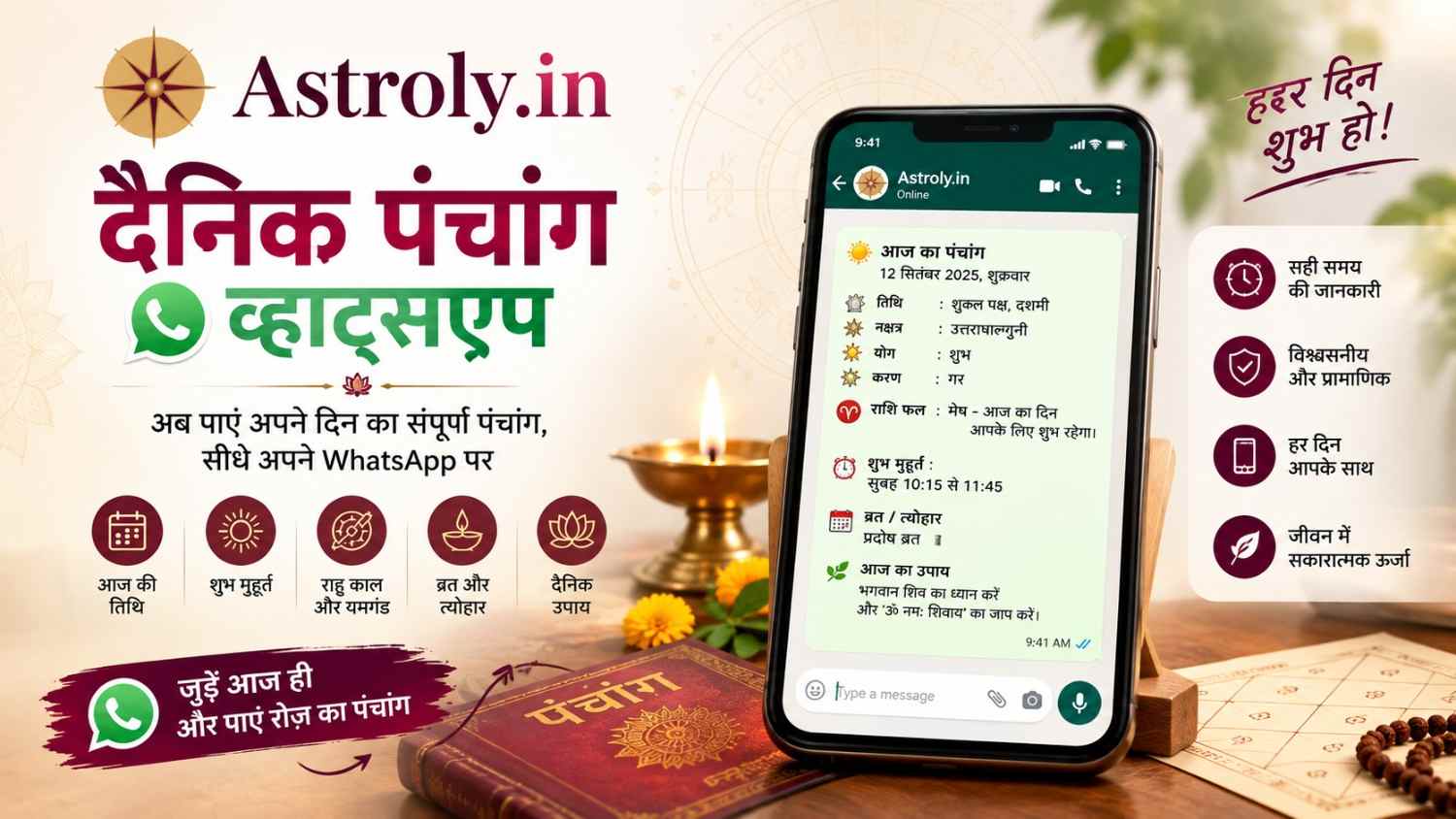
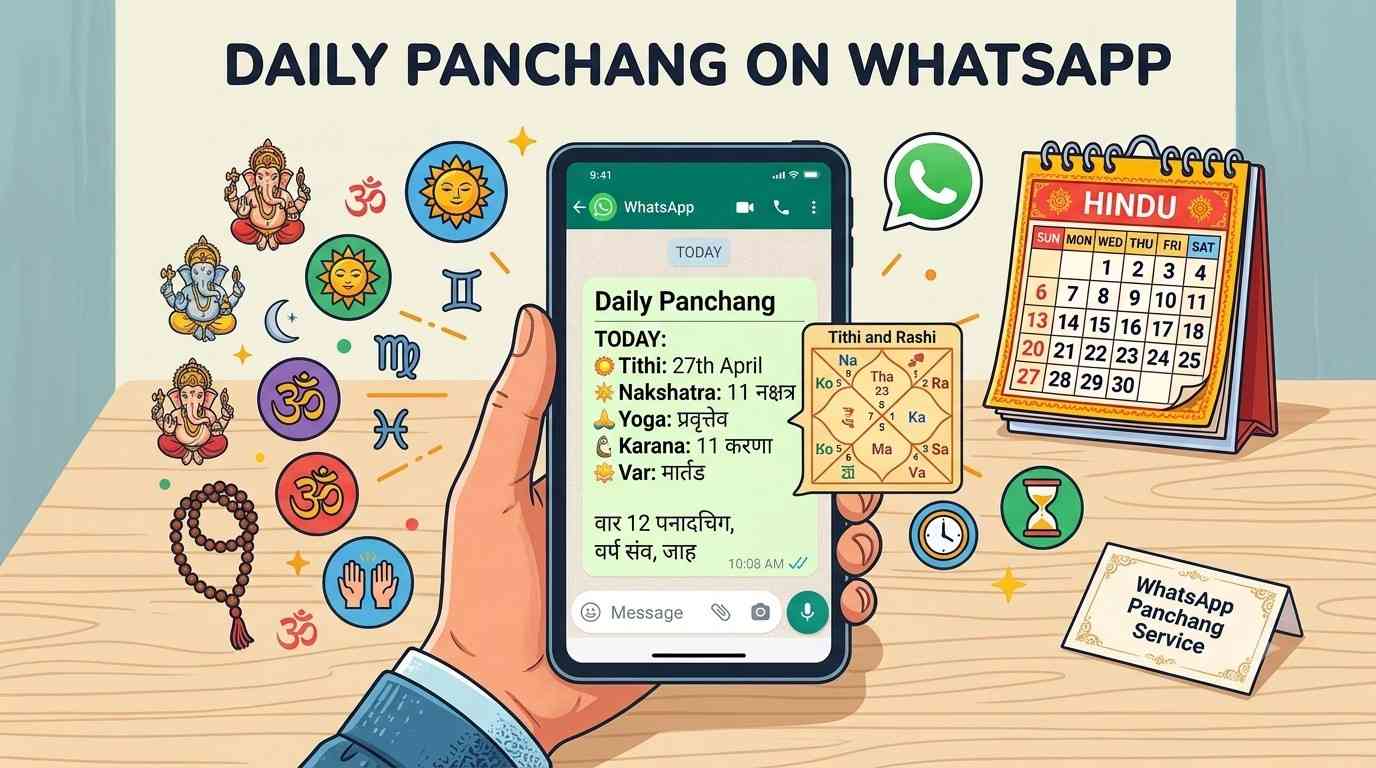
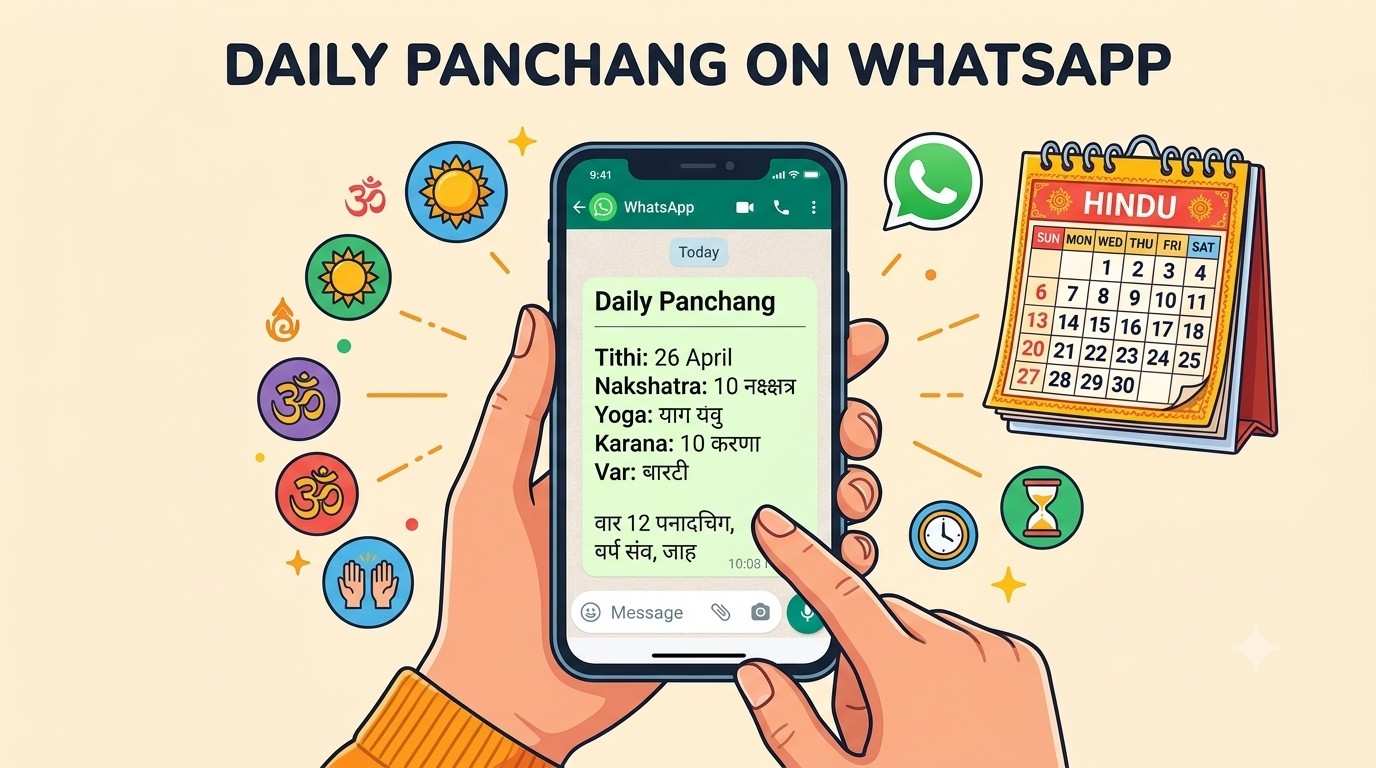
sends a free daily Panchang on WhatsApp every morning — today's tithi, the nakshatra the Moon is sitting in, shubh muhurat windows, Rahu Kaal timing, and more. Clean, simple, and there before your first cup of chai. No searching. No ads. No clicking through five pages to find what you actually need.
What Exactly Is a Panchang — and Why Should You Care?
Let's be honest. A lot of people know the word Panchang but would struggle to explain what it actually contains. So before we get into the WhatsApp part, here's a quick grounding.
Pancha means five. Anga means limb. A Panchang has five of them.
The Five Things a Panchang Tells You Every Day
Tithi is the lunar day. The Hindu calendar runs on the Moon, not the Sun, and the tithi changes roughly every 19 to 26 hours. Knowing the tithi tells you whether today falls in the bright fortnight (Shukla Paksha) or the dark fortnight (Krishna Paksha) — which matters enormously for fasting, pujas, and auspicious activities.
Nakshatra is the star cluster the Moon is passing through. There are 27 of them. Some nakshatras are excellent for travel and new beginnings. Others are traditionally avoided for weddings or important decisions. Your grandparents probably knew this by heart. Most of us need a reminder — which is exactly what the daily message provides.
Yoga is a combination of the Sun and Moon's positions. There are 27 yogas too, and they range from highly auspicious (Siddha, Amrita) to ones you'd rather not schedule your big meeting during.
Karana is half a tithi. It changes twice a day. Mostly relevant for those who follow Vedic timing closely, but good to know.
Vara is simply the weekday — but in Vedic tradition, each day of the week is ruled by a planet, which adds meaning to what kinds of activities are favoured.
So Why Does This Matter in 2026?
You might think this is old knowledge that modern life has made irrelevant. But speak to any businessperson from a traditional family in Gujarat, Tamil Nadu, or Rajasthan, and they will tell you they still check the muhurat before signing a property deal. Ask a new mother in Maharashtra when she scheduled her baby's naming ceremony. Ask a farmer in Punjab when he sowed his first seeds of the season.
The Panchang is not superstition. It is India's oldest practical almanac — an attempt to align human action with the rhythms of the sky. Whether you take it literally or use it as a daily ritual of mindfulness, it grounds you in something larger than your to-do list.
Why WhatsApp Is the Smartest Way to Receive Your Daily Panchang
There are already apps for Panchang. There are websites. Some people still use printed almanacs bought at the local temple stall every year. So why does WhatsApp work better for most people?
You Don't Have to Remember to Check It
This is the big one. Apps send push notifications — which most people have turned off because they're annoying. Websites require you to actively navigate there. A printed almanac sits on a shelf and gets consulted when you remember it exists.
A WhatsApp message just arrives. It is already in the app you check first. It needs no extra habit, no app management, no notification settings. It simply shows up, the way a message from your mother does.
It Works for Everyone — Not Just Tech-Savvy Users
WhatsApp runs on a ₹5,000 smartphone just as well as on the latest flagship. The daily Panchang message does not require the latest OS update, a strong internet connection, or any technical knowledge to receive and read. This matters in a country where astrology is not just an urban trend — it is woven into daily life from Kashmir to Kanyakumari.
One Message, Easily Shared
The moment you read today's Rahu Kaal timing, you can forward it to your family WhatsApp group. Your parents get it. Your spouse gets it. Done. Try doing that with an app notification.
What Astroly Sends You Every Morning
Astroly's daily Panchang on WhatsApp is not a generic daily quote dressed up as astrology. It is actual Panchang data, freshly computed each day based on real planetary positions. Here is what lands in your chat every morning:
Today's Tithi and Paksha
You see immediately whether you are in the waxing or waning Moon period and which lunar day it is. Ekadashi? Purnima? Amavasya? It is right there, with no ambiguity.
The Moon's Nakshatra
The nakshatra is listed clearly — and because most people have learned which nakshatra their own Moon sits in (from their Kundli), they quickly develop an intuition for how the Moon's daily transit affects them personally.
Shubh Muhurat Windows
This is where the message becomes genuinely useful for daily life. Abhijit Muhurat — the universal auspicious window around midday — is listed. So is Brahma Muhurat (the early-morning window before sunrise, ideal for study, meditation, and important starts). Amrit Kaal and Rahu Kaal are both included, so you know which hours to favour and which to sidestep for important work.
Sunrise, Sunset, and Moonrise Timings
These are not just nice-to-have — they define when tithis begin and end, and they matter for Sandhya Vandanam, puja timings, and fasting rules. Knowing today's sunrise at 05:43 and sunset at 19:12 has real practical value for observant Hindus.
Yoga and Karana
For those who follow these closely, both are included. For those who don't yet — it's exposure that builds knowledge over time.
How to Subscribe to Daily Panchang on WhatsApp (Takes Under 2 Minutes)
Getting this set up is genuinely simple. There's no app to download for the WhatsApp service itself, no account creation required, no payment details needed.
Step 1: Go to the Astroly WhatsApp Page
Visit on your phone or any browser.
Step 2: Enter Your WhatsApp Number
Put in the mobile number linked to your WhatsApp. That is the only information needed. Astroly does not use it for anything other than delivering your daily message — you can read their privacy policy at if you want the full details.
Step 3: Confirm via WhatsApp
A quick confirmation message arrives on WhatsApp. Tap to confirm. Done.
From the next morning onwards, your Panchang on WhatsApp arrives automatically. No further action needed on your part.
Want More Than Just the Daily Panchang?
Download the Astroly app from Google Play for the full experience — free Kundli, Kundali matching, personal daily Rashifal drawn from your own birth chart, and the ability to ask a verified Vedic jyotishi a specific question:
The app also has the full Panchang page at if you ever want to go deeper than the daily summary — nakshatra details, extended muhurat tables, and more.
Panchang on WhatsApp vs. Other Options: An Honest Comparison
| Panchang on WhatsApp (Astroly) | Google Search | Printed Almanac | Separate App | |
|---|---|---|---|---|
| Daily effort | None after setup | Open, type, wait, read | Find the book | Open app |
| Works without Wi-Fi | ✓ (on mobile data) | ✗ | ✓ | Partly |
| Shareable instantly | ✓ | ✗ | ✗ | ✗ |
| Free | ✓ | ✓ | One-time cost | Often not |
| Personalised | Subscription-based | ✗ | ✗ | Sometimes |
The daily WhatsApp message wins on sheer convenience. Every other method requires you to remember and take action. This one does not.
10 Questions People Actually Ask About This Service
Is the Panchang on WhatsApp from Astroly really free?
Yes, completely. No subscription fee, no trial period that expires, no credit card. Subscribe at and it stays free.
What time does the message arrive?
Early morning — typically before or around sunrise, so the muhurat information is relevant before your day begins.
Can I unsubscribe whenever I want?
Yes. Reply STOP to any message from Astroly on WhatsApp and you're removed immediately.
Is the Panchang adjusted for my city's sunrise time?
Astroly uses Vedic astronomical calculations that account for local sunrise and sunset, which affect when tithis begin and end. For fully location-specific data, the full Panchang page at is the place to go.
Will Astroly share my WhatsApp number with anyone?
No. The number is used only to send your daily Panchang. Full privacy policy: .
What is the difference between Panchang and Rashifal?
Panchang is universal — the same tithi, nakshatra, and muhurat apply to everyone on a given day. Rashifal (horoscope) is zodiac-specific, based on where the planets are transiting in relation to your rashi. Astroly offers both: the daily Panchang on WhatsApp and a personal Rashifal at .
Do I need to download an app to get the WhatsApp messages?
No. The WhatsApp subscription is completely separate from the app. That said, the adds a lot — free Kundli, Kundali matching, daily horoscopes, and astrologer consultation.
Can I forward the message to my family?
Absolutely — that is one of the main reasons WhatsApp works so well for this. One tap and your parents or family group gets today's Panchang.
What is Abhijit Muhurat and why does it appear in every daily message?
Abhijit Muhurat is a daily window of about 48 minutes around solar noon that is considered universally auspicious in Vedic tradition — no specific nakshatra or tithi condition needed. It is consistently one of the most-asked-about elements in the daily message.
Is the Panchang data accurate or just generic content?
It is computed fresh daily using classical Vedic astronomical methods — Surya Siddhanta and Drik Panchang calculations — not pre-written filler content. Astroly operates as a serious Vedic astrology platform, not a content farm.
A Small Habit With a Meaningful Ripple
Here is something worth thinking about. Most of us start the morning on autopilot — checking notifications, scrolling social media, reading bad news before our brain has fully woken up. Replacing even thirty seconds of that with a quiet look at today's Panchang changes the quality of how you enter the day.
You know whether it's Ekadashi. You know the shubh muhurat window. You know whether the Moon is in a nakshatra that calls for caution or boldness. None of this tells you what will happen. But it helps you decide how you want to move through whatever does happen.
That is what the daily Panchang on WhatsApp actually gives you — not a prediction, but a frame.
Start Tomorrow Morning
You are one step away from making this part of your daily routine. Subscribe for free right now:
And for the full Vedic toolkit—free Kundli, Kundali matching, personal Rashifal, pooja booking, and live astrologer consultation — the Astroly app has everything in one place:
Download Astroly on Google Play
Tomorrow morning, instead of opening to memes, you will open to muhurat.
The Panchang data in Astroly's daily WhatsApp messages is computed using classical Vedic astronomical methods. For major life decisions — weddings, griha pravesh, business launches — we recommend consulting a qualified Jyotishi for a personalised muhurat selection.