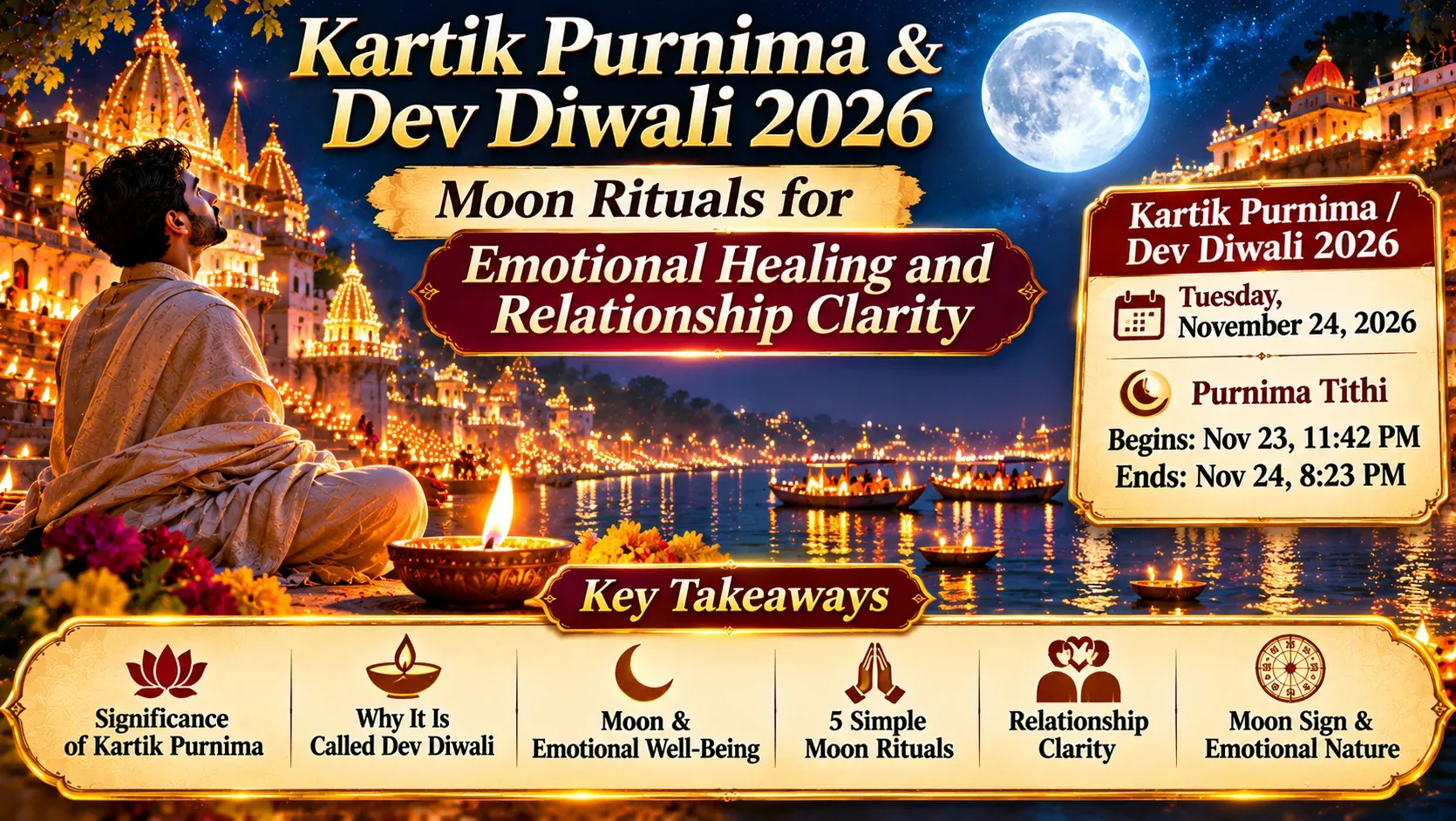
Kartik Purnima & Dev Diwali 2026: Moon Rituals for Emotional Healing and Relationship Clarity
Direct answer: Kartik Purnima and Dev Diwali will be celebrated on Tuesday, November 24, 2026. In New Delhi, the Purnima Tithi begins at approximately 11:42 PM on November 23 and ends at approximately 8:23 PM on November 24. Traditionally, devotees observe the day through prayers, holy bathing, charity and Deep Daan. The full Moon is also associated with reflection and emotional awareness in Vedic astrology, making this a meaningful occasion for prayer, self-reflection and relationship clarity.
Kartik Purnima is one of the important full Moon observances in the Hindu calendar. It is also celebrated as Dev Diwali, when temples and ghats are illuminated with lamps.
Beyond the religious celebrations, the full Moon offers an opportunity to pause, reflect on personal relationships and think about emotional well-being.
Let's understand the significance of this day and the traditional practices associated with it.
When Is Kartik Purnima and Dev Diwali in 2026?
Kartik Purnima falls on Tuesday, November 24, 2026, in New Delhi.
| Event | Date and timing |
|---|---|
| Purnima Tithi begins | November 23, approximately 11:42 PM |
| Purnima Tithi ends | November 24, approximately 8:23 PM |
| Kartik Purnima | Tuesday, November 24 |
| Dev Diwali | Tuesday, November 24 |
| Sunrise in New Delhi | Approximately 6:51 AM |
| Sunset in New Delhi | Approximately 5:25 PM |
Dev Diwali is traditionally observed during the evening Pradosh period on Kartik Purnima. In Varanasi, the ghats are especially known for their Deep Daan celebrations.
Timings can vary by location and Panchang calculation. Check the Astroly Panchang for date-specific details before planning any observance.
Why Is Kartik Purnima Called Dev Diwali?
Dev Diwali is popularly known as the Diwali of the Gods.
According to Hindu tradition, Lord Shiva defeated the demon Tripurasura on this day. The occasion is therefore also associated with Tripurari Purnima and the worship of Lord Shiva.
Devotees traditionally celebrate by:
- Lighting diyas in homes and temples.
- Offering prayers to Lord Shiva and Lord Vishnu.
- Performing Deep Daan near rivers or other permitted places.
- Taking a holy bath according to family tradition.
- Donating food, clothes or other useful items.
In Varanasi, the celebration is particularly known for thousands of lamps illuminating the ghats along the Ganga.
What Is the Connection Between the Full Moon and Emotional Well-Being?
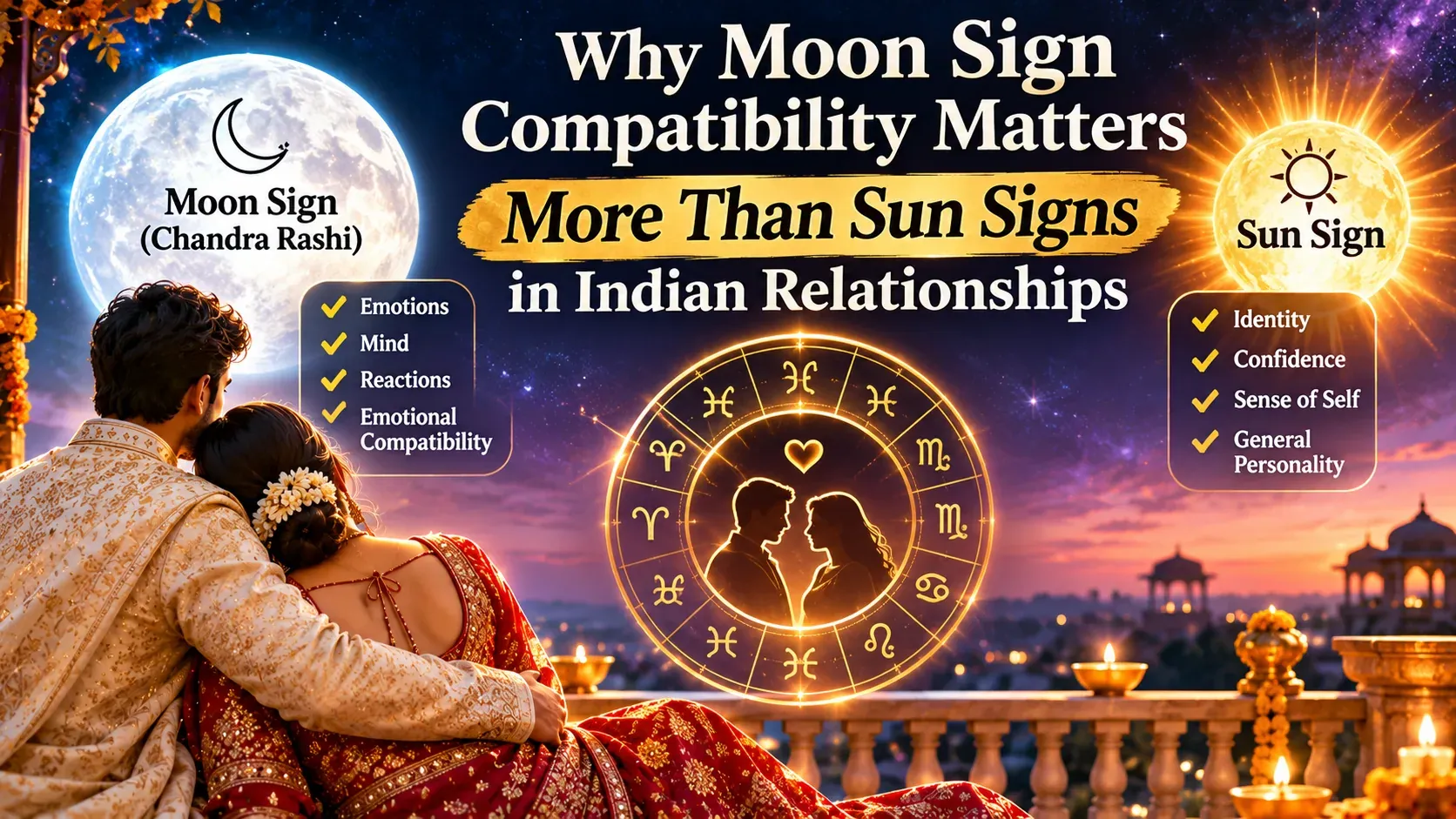
In Vedic astrology, the Moon is traditionally associated with the mind, emotions, memories and mental responses.
The Moon is also called Chandra and is considered an important factor when examining a person's emotional tendencies in their birth chart.
Because of this association, full Moon days are often treated as opportunities for prayer, meditation and reflection in several spiritual traditions.
However, a full Moon ritual should not be presented as a scientifically proven treatment for emotional distress or relationship problems.
5 Simple Moon-Related Practices for Emotional Reflection
You do not need complicated rituals to observe Kartik Purnima. Here are five simple practices that can make the day more meaningful.
1. Spend a Few Minutes in Quiet Reflection
Take some time away from daily distractions. Think about the situations that have been affecting your peace of mind and identify what you can realistically change.
2. Offer Prayers to Chandra Dev
In Hindu tradition, devotees may offer prayers to Chandra Dev on Purnima. You can follow your family customs and recite a traditional Moon mantra if it is part of your practice.
3. Practise Gratitude
Write down a few things you appreciate in your life. This can help you shift attention towards supportive relationships and positive experiences.
4. Light a Diya and Perform Deep Daan
Lighting a diya is one of the central practices associated with Dev Diwali. Perform Deep Daan safely and follow local rules, especially near rivers and public places.
5. Have an Honest Conversation
If a relationship has been affected by misunderstandings, use the occasion as a reminder to communicate calmly.
A ritual cannot resolve every disagreement, but listening, honesty and mutual respect can help people understand one another better.
What Does the Moon Sign Reveal About Your Emotional Nature?
In Vedic astrology, the Moon sign, also known as Chandra Rashi, is traditionally examined to understand emotional tendencies and mental responses.
Different Moon signs are associated with different emotional styles in traditional interpretations.
For example, some signs are associated with practical responses, while others are described as more expressive, sensitive or independent.
These descriptions are broad astrological interpretations, not fixed personality assessments.
You can find your Moon sign using Astroly's Free Rashi Calculator.
You can also explore your Daily Rashifal for all 12 zodiac signs to read the traditional Moon-sign-based interpretation for the day.
How Can Astrology Help You Understand Relationship Patterns?
In traditional Vedic astrology, relationship analysis involves more than the Moon sign.
Astrologers may examine:
- Moon: Emotional tendencies and mental responses.
- Venus: Love, attraction and relationship preferences.
- 7th house: Marriage and long-term partnerships.
- 5th house: Romance and emotional involvement.
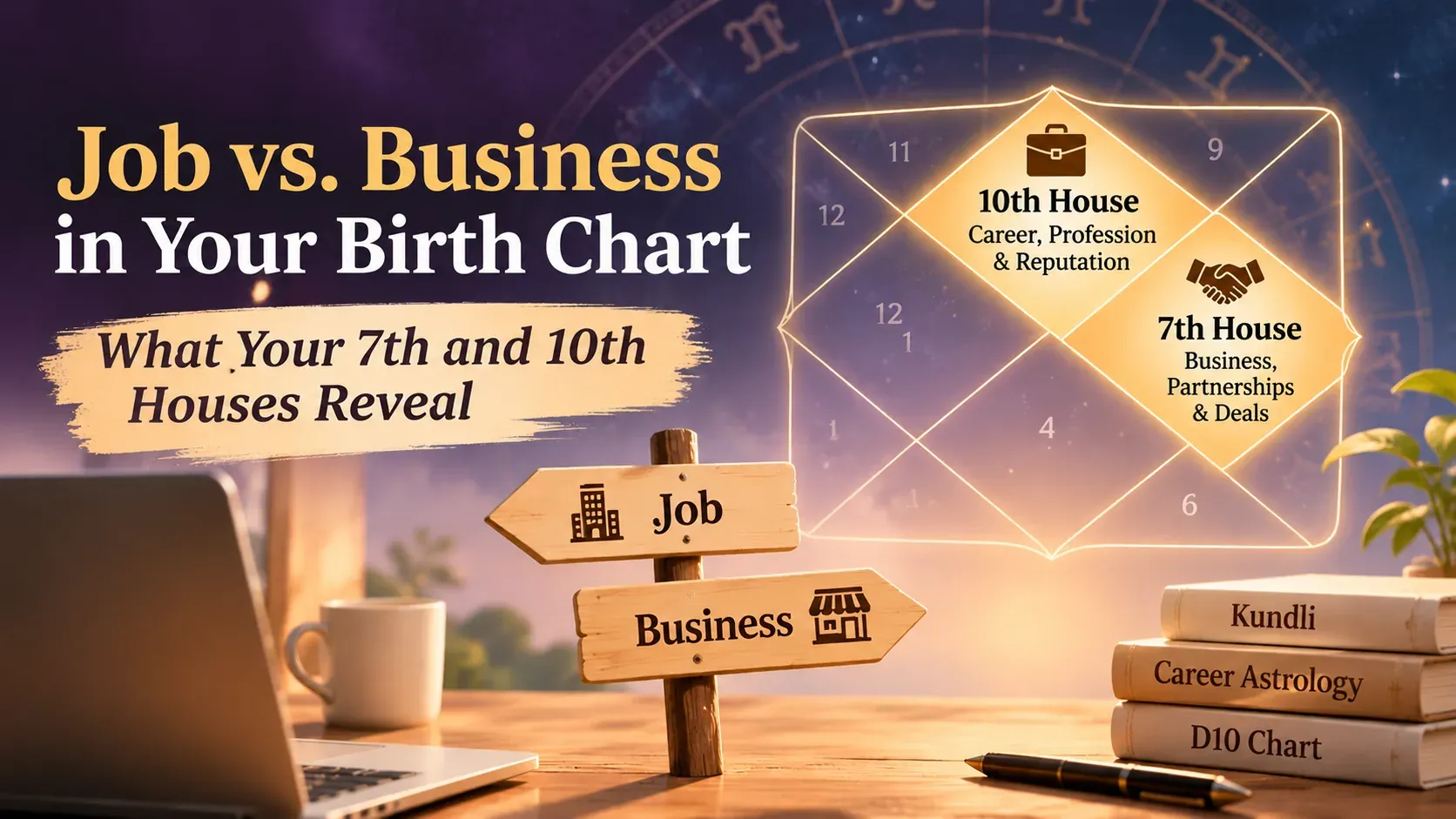
- Navamsa (D9): A divisional chart traditionally used for marriage analysis.
These factors are interpreted together rather than treated as independent predictions.
If you want to explore your own planetary placements, generate your Free Online Kundli on Astroly.
Want to Explore Your Moon Sign and Relationship Questions?
Kartik Purnima is a meaningful occasion to reflect on emotional well-being, relationships and personal priorities.
If you want to understand how the Moon and other planetary placements are traditionally interpreted in your birth chart, you can chat with an astrologer on Astroly and discuss your questions.
Frequently Asked Questions
1. When is Kartik Purnima in 2026?
Kartik Purnima falls on Tuesday, November 24, 2026. In New Delhi, the Purnima Tithi begins late on November 23 and ends at approximately 8:23 PM on November 24.
2. Is Dev Diwali celebrated on Kartik Purnima?
Yes. Dev Diwali, also called Dev Deepawali, is traditionally celebrated on Kartik Purnima. Varanasi is particularly known for its evening lamp ceremonies.
3. Why is the Moon important in Vedic astrology?
The Moon is traditionally associated with the mind, emotions and mental responses. Its position in the birth chart is used to determine the Chandra Rashi.
4. What can I do on Kartik Purnima for emotional peace?
You may observe traditional prayers, meditation, charity, Deep Daan and personal reflection according to your beliefs and family customs.
5. Does the full Moon affect relationships?
Vedic astrology associates the Moon with emotional responses, but there is no established scientific evidence that a full Moon determines relationship outcomes. Communication and mutual understanding remain important.
6. How can I find my Moon sign?
You can use a Moon sign or Rashi calculator with your birth details. Astroly's Rashi Calculator can help you identify your Chandra Rashi.
Final Thoughts
Kartik Purnima and Dev Diwali are occasions associated with devotion, light and spiritual reflection.
In 2026, the festival falls on November 24. Whether you observe it through Deep Daan, prayer, charity or a quiet moment of reflection, the day can serve as a reminder to give attention to your emotional well-being and relationships.
In Vedic astrology, the Moon represents the mind and emotions. Understanding your Moon sign can offer a traditional perspective on emotional tendencies, but meaningful relationships continue to depend on communication, respect and personal choices.
Disclaimer: This article explains traditional Hindu practices and Vedic astrology concepts for educational purposes. Rituals and their interpretations vary across regions and families. Astrology is not a scientifically established method of treating emotional difficulties or predicting relationship outcomes.