Introduction
Let us start with the moment most people first hear about it. A pandit studies the kundli, pauses, and says you have Kaal Sarp Dosha. The words land heavily. Nobody in the room looks happy. And you leave with a head full of worry and very little actual information. If that sounds familiar, this guide is for you—the types of Kaal Sarp Dosha, effects, remedies, and benefits, laid out honestly, without the scare tactics.
Here is the first thing nobody tells you in that room: this yoga is common. It appears when all seven planets fall on one side of the Rahu–Ketu axis, and a large number of charts show exactly that. The tradition that named it also gave it remedies and a timeline. Fear is not part of the original teaching—it got added later, mostly by people selling solutions.
The second thing: there is no single Kaal Sarp Dosha. Twelve types, named after serpents, each tied to a different house. The type decides which part of life feels the pressure—and which remedy fits. Once you know your type, the subject becomes manageable. That is what the types of Kaal Sarp Dosha, effects, remedies, and benefits actually give you: clarity instead of dread.
First, What This Yoga Really Means
Rahu and Ketu are the shadow points of Vedic astrology—not physical planets, but the points where the moon's orbit crosses the sun's path, always exactly opposite each other. When all seven planets end up on one side of this axis, the chart is said to carry the serpent yoga: kaal, time; sarp, serpent—time coiled around the planets like a snake.
What does the coil do? It intensifies. Rahu is hunger—ambition, appetite, and the drive to experience everything. Ketu is release—detachment, the urge to let go. Caught between the two, a person lives life at a higher volume: stronger desires, sharper setbacks, and progress in waves. Not a punishment in the classical view—a pattern, demanding but workable.
Why you should not panic
Three facts. One: millions carry this formation and live ordinary, successful lives. Two: the tradition says the influence softens with age, usually easing after the late thirties. Three: every classical discussion includes remedies—the system that named the problem provided the tools. Anyone who mentions the dosha without these three facts is frightening you, not educating you. That is the calm way to read the types of Kaal Sarp Dosha, their effects, remedies, and benefits.
Get the chart right first.
Everything depends on an accurate kundli, and accuracy depends on birth time—even a small error can move planets between houses. Before absorbing a single worry, make sure the chart itself is correct.
Types of Kaal Sarp Dosha, Effects, Remedies, and Benefits: All 12 Types
The type is decided by one thing: Rahu's house, with Ketu always seven houses away. Twelve houses, twelve serpents, and twelve types—each with the area of life tradition it connects to.
Anant, Kulik, and Vasuki—Rahu in houses one to three
Anant Kaal Sarp Dosha—Rahu in the first house, Ketu in the seventh. The first house is the self: body, temperament, presence. Tradition connects this type with struggles around confidence and recognition—working hard while remaining unseen—and notes stress-related health complaints.
Kulik Kaal Sarp Dosha—Rahu in the second, Ketu in the eighth. The second house is wealth, family, and speech. Money comes and goes; savings refuse to accumulate; family matters carry friction. Words spoken in anger cost more than usual here, the tradition warns.
Vasuki Kaal Sarp Dosha—Rahu in the third, Ketu in the ninth. The third house is courage, siblings, and initiative. Bold beginnings meet stubborn resistance; siblings may be distant; fortune feels delayed despite genuine effort. The compensating gift, tradition says, is courage learned the hard way.
Shankhpal, Padma, Mahapadma—Rahu in houses four to six
Shankhpal Kaal Sarp Dosha—Rahu in the fourth, Ketu in the tenth. Tradition links this type to restlessness at home, distance from the mother, and a career that takes more than it gives early on. Inner peace arrives late and must be built deliberately.
Padma Kaal Sarp Dosha—Rahu in the fifth, Ketu in the eleventh. The fifth house holds children, creativity, education, and romance. Classical associations: worries around children, obstacles in education or love—alongside unusual creative depth.
Mahapadma Kaal Sarp Dosha—Rahu in the sixth, Ketu in the twelfth. The sixth house is competition, enemies, and disease. Considered comparatively gentle—tradition says it helps the native overcome rivals—with one standing instruction: heed the body's early signals.
Takshak, Karkotak, Shankhnaad—Rahu in houses seven to nine
Takshak Kaal Sarp Dosha—Rahu in the seventh, Ketu in the first. The seventh house is marriage and partnership: delays, friction with a spouse, and partnerships that test patience. The unglamorous advice: communicate more, document agreements.
Karkotak Kaal Sarp Dosha—Rahu in the eighth, Ketu in the second. The eighth house governs sudden events, inheritance, and longevity—the heaviest classical reputation: sudden reversals, property disputes, and health scares from nowhere. The tradition prescribes remedies most strongly here.
Shankhnaad Kaal Sarp Dosha—Rahu in the ninth, Ketu in the third. The ninth is fortune, dharma, and the father. Luck feels unreliable; the father relationship can strain. Spiritual practice is the prescribed counterweight—more explicitly here than anywhere else.
Paatak, Vishdhar, and Sheshnaag—Rahu in houses ten to twelve
Paatak Kaal Sarp Dosha—Rahu in the tenth, Ketu in the fourth. The tenth house is career and public standing: sudden changes, credit going elsewhere, and difficult authority figures. The classical counsel: persist in one field—depth is eventually rewarded.
Vishdhar Kaal Sarp Dosha—Rahu in the eleventh, Ketu in the fifth. The eleventh is gains, elder siblings, and networks. Friendships turn unreliable; gains arrive late or evaporate. Choose your associates with unusual care.
Sheshnaag Kaal Sarp Dosha—Rahu in the twelfth, Ketu in the sixth. The twelfth is expenses, foreign lands, and the inner life. Money drains mysteriously; sleep suffers; anxiety hums underneath—set against a genuine deepening of spiritual inclination.
Twelve types, twelve different conversations. The types of Kaal Sarp Dosha, effects, remedies, and benefits mean nothing in the abstract—they matter the moment they attach to your chart.
Effects: What People Actually Experience
Strip away the drama, and the reported effects are remarkably consistent—the same handful of experiences, in different words, across all twelve types. Learn the pattern, and you stop being surprised by it.
Delay is the headline.
Everything takes longer—the job, the promotion, the marriage, the business. The most reported effect of all, explained as the serpent's grip loosening slowly. Plan for longer timelines from the start: not pessimism, just accurate budgeting of patience. Those who study the types of Kaal Sarp Dosha, effects, remedies, and benefits closely learn to stop reading delay as defeat.
Intensity in everything
Desires run strong; disappointments cut deep. Highs are very high, lows very low—this emotional amplitude is part of the package. It makes for exhausting twenties and formidable forties: the intensity that overwhelms early becomes fuel later, once learned to steer.
Dreams, sleep, and the restless mind
The classical texts mention vivid dreams—snakes, water, ancestors—and a mind that won't settle. Literal or metaphor, the prescription is identical: protect your sleep. A tired mind turns every small problem into a large one, dosha or no dosha.
Pressure on one bond
Each type of Kaal Sarp Dosha strains a particular relationship—spouse, mother, father, siblings, or friends. The strain is specific, so the repair can be specific: invest in that bond deliberately instead of wondering why it feels harder than it looks for others.
The body keeps score
Stress lodges somewhere physical—digestion, sleep, blood pressure. Several types carry explicit health cautions, and the tradition is blunt: no mantra replaces a doctor. Regular check-ups are as much a remedy as any puja.
Remedies: The Practical Path
Now the useful part. The tradition offers remedies at every level of effort and expense, with consistent advice: begin with the simple, stay regular, and escalate only if you wish. Here is the standard repertoire of the types of Kaal Sarp Dosha, effects, remedies, and benefits texts handed down.
Start with the daily small things.
Chant Om Namah Shivaya every morning—even eleven times counts, done with attention. Offer water to a Shivling on Mondays. Feed birds regularly. Give to the needy on Saturdays, quietly. These four practices appear in nearly every classical discussion of the types of Kaal Sarp Dosha, effects, remedies, and benefits. They cost nothing, take minutes, and form the foundation.
The Maha Mrityunjaya Mantra
The heavy artillery of the mantra world, and the mantra most associated with this dosha: 108 repetitions daily is the classical prescription—start with 27 and build up, since consistency beats quantity. Rudrabhishek, the ceremonial bathing of the Shivling, is the companion ritual, most potent on Mondays and during Shravan.
The formal Nivaran Puja
The full ritual is the Kaal Sarp Dosh Nivaran Puja—traditionally at Trimbakeshwar or Ujjain, ideally on Nag Panchami or in Shravan. A few hours, specific mantras, and offerings to the serpent deities, conducted by temple priests. Book through official temple channels; treat the touts outside as scenery, not ritual.
Nag Panchami
Once a year the calendar gives you the most auspicious day for all of this. On Nag Panchami, fasting and offering milk and flowers at a Nag temple are the traditional observances—it is also the day most people choose for the Nivaran Puja. Mark it like any important appointment.
Keep your head about you.
Final caution, and it matters. Kaal Sarp Dosha has a whole economy built around frightening people—urgent warnings, secret rituals, and five-figure fees. The classical texts emphasize devotion and regularity, not expenditure. Walk away from anyone who demands haste, secrecy, or large sums. A genuine guide calms you. A salesman scares you. Learn the difference.
Benefits: The Other Half of the Story
Almost nobody volunteers this part: the tradition attributes real strengths to this formation. A full account of the types of Kaal Sarp Dosha, effects, remedies, and benefits includes the gifts—and the gifts are not small.
Resilience, earned the hard way
Years of delays and reversals produce something valuable: a person who does not break. Natives are described as recovering from blows that would end others. In the long run, absorbing a setback and continuing is worth more than an easy start.
The late bloom
The classical view: the grip loosens with age, often after the late thirties, and the second half runs smoother and higher than the first. The worst response is concluding at thirty that the story is written—the tradition says the best chapters come later. That is the practical moral of the types of Kaal Sarp Dosha, effects, remedies, and benefits: invest, learn, and build, even when early returns disappoint.
Depth of character
Living with intensity, delay, and pressure either embitters a person or deepens them—and the tradition favors the latter. Self-knowledge, detachment from outcomes, and compassion for others' struggles: these quiet benefits compound over a lifetime.
Unusual achievement
Astrologers have long noted this formation among people who achieved extraordinary things—the same concentrated energy that causes turbulence also powers exceptional drive. Harder start, stronger finish. Not a guarantee of greatness—a particular kind of fuel, and fuel is what you make of it.
Check your own chart.
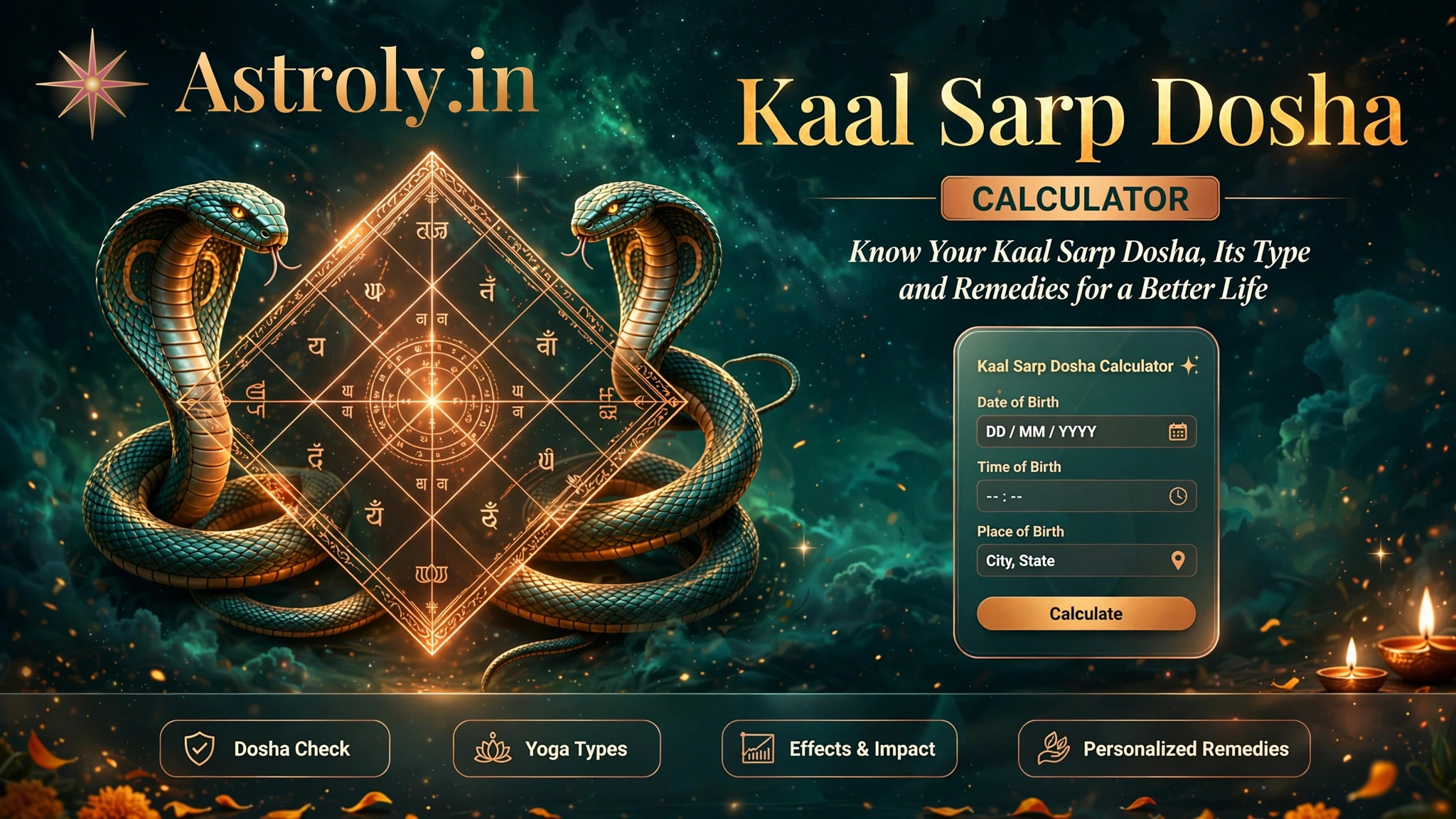
All of this becomes real only when it connects to your kundli. Guessing your type from symptoms is backwards—get the chart cast, see the formation, then read. Astroly's free Kaal Sarp Dosha calculator shows you exactly where you stand in minutes.
Frequently Asked Questions
How do I find out which type I have?
Rahu's house decides—the first house is Anant, the second Kulik, and the third Sheshnaag in the twelfth. You need an accurate kundli with the correct birth time; Astroly's free calculator identifies the formation directly.
Should I be scared of it?
No. The tradition describes a demanding karmic pattern with remedies, a timeline, and recognized strengths—not a curse. Treat it as information to work with, and be wary of anyone who benefits from your fear.
Which type is the worst?
Karkotak, with Rahu in the eighth house, has the heaviest classical reputation—the eighth governs sudden events. But planetary strength, dashas, and aspects can soften or sharpen any type.
Can it be removed completely?
The classical language is pacification, not removal. Remedies are said to reduce the intensity greatly, and the influence softens naturally with age. Think management, not erasure—the consistent message of the types of Kaal Sarp Dosha, effects, remedies, and benefits.
Do I need an expensive puja?
No. The foundation of every remedy list is free: chanting, Monday worship, feeding birds, and charity. The formal puja is optional, and the temple's official fee is modest. Anyone quoting large sums is selling something the tradition never priced.
When does its effect reduce?
The widely repeated view points to the late thirties as the turning point, with the forties running notably smoother. Timelines vary with dashas, but the direction holds: constriction early, release later.
Conclusion
Let us close where we began—in that room, with the pandit's pause. The difference: you now know what the words mean. Twelve types, each touching a different corner of life. Effects that follow a pattern. Remedies starting with a morning mantra. Benefits—resilience, depth, the late bloom—are honored by the tradition itself. The types of Kaal Sarp Dosha, effects, remedies, and benefits are not a verdict. They are a map.
So walk the first step today. Check your Kaal Sarp Dosha free on Astroly's calculator and see your chart clearly. And download the Astroly app for daily updates—daily panchang, personalized guidance, and festival reminders, every single day.