Tulsi Vivah 2026: Significance and Vedic Remedies for Delayed Marriage
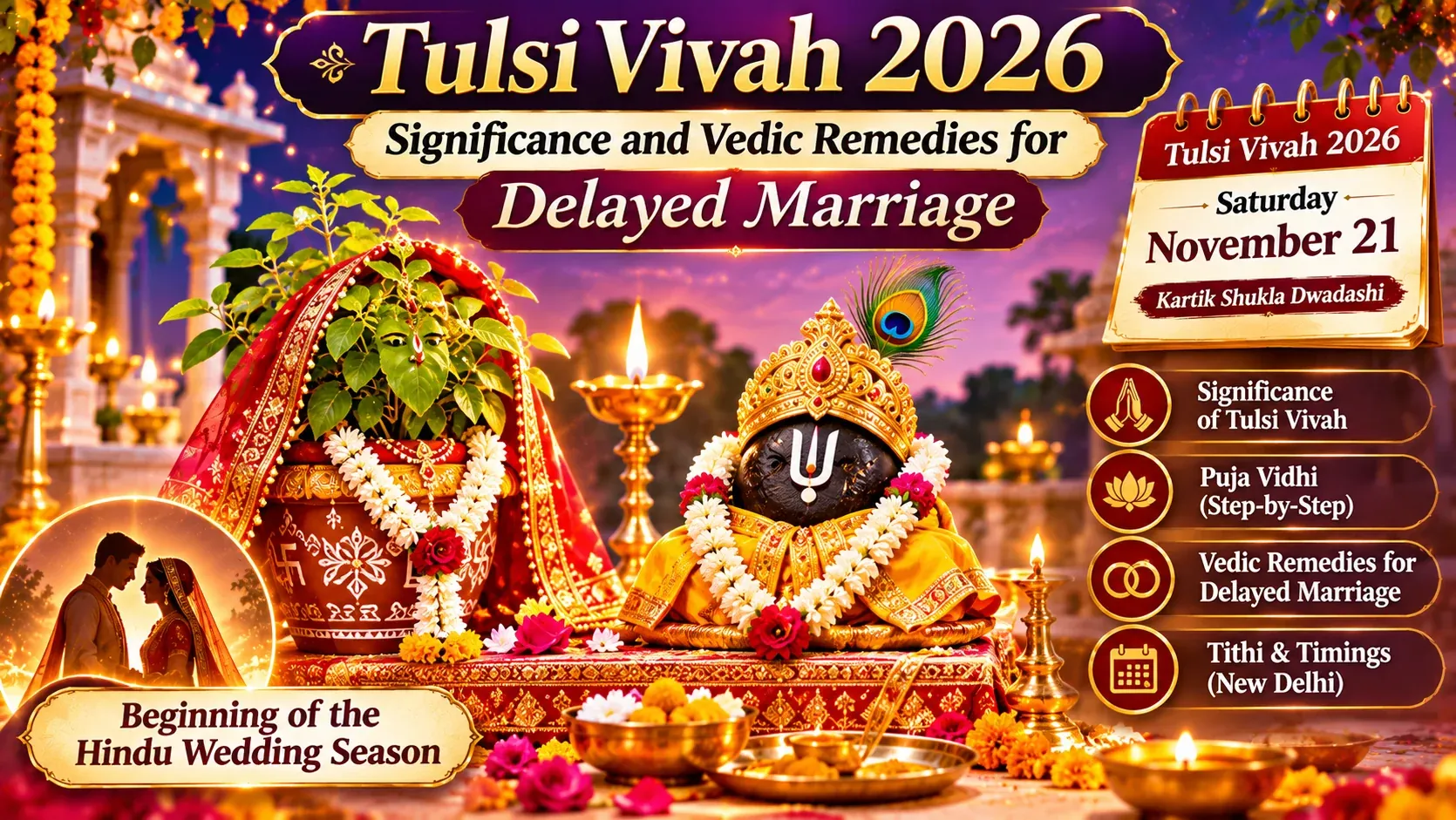
Direct answer: Tulsi Vivah 2026 will be observed on Saturday, November 21, in New Delhi, on Kartik Shukla Dwadashi. The Dwadashi Tithi begins at approximately 6:31 AM on November 21 and ends at approximately 4:56 AM on November 22. Traditionally, devotees perform the marriage ceremony of Goddess Tulsi and Lord Vishnu in the form of Shaligram during the evening. The occasion is also associated with prayers for marital harmony and a favourable beginning to the Hindu wedding season.
Tulsi Vivah is an important Hindu observance that symbolically celebrates the marriage of Tulsi Mata with Lord Vishnu. Many families observe it after Dev Uthani Ekadashi and consider it an auspicious occasion for prayers related to marriage and family well-being.
If you are concerned about delayed marriage, the festival can also be an opportunity for prayer, reflection and devotion. Here is what the tradition means and how the ceremony is generally performed.
When Is Tulsi Vivah in 2026?
Tulsi Vivah falls on Saturday, November 21, 2026, in the New Delhi Panchang.
| Event | Date and timing |
|---|---|
| Tulsi Vivah | Saturday, November 21, 2026 |
| Tithi | Kartik Shukla Dwadashi |
| Dwadashi begins | November 21, approximately 6:31 AM |
| Dwadashi ends | November 22, approximately 4:56 AM |
| Traditional ceremony | Evening, during the locally appropriate Pradosh period |
Timings are for New Delhi and may differ slightly across Panchang sources and locations. Some families also perform Tulsi Vivah on the evening of Dev Uthani Ekadashi, according to their family tradition.
Check the Astroly Panchang for local Tithi and festival details before planning the ceremony.
Why Is Tulsi Vivah Celebrated?
Tulsi Vivah symbolises the ceremonial marriage of Goddess Tulsi, also associated with Vrinda, to Lord Vishnu in his Shaligram form.
According to Hindu tradition, Tulsi is considered sacred and is associated with devotion, purity and auspiciousness. The ceremony represents the divine union of Tulsi and Vishnu.
The festival is traditionally associated with:
- Devotion to Lord Vishnu and Goddess Tulsi.
- Prayers for marital harmony.
- Family well-being and prosperity.
- The conclusion of Chaturmas.
- The beginning of the traditional Hindu wedding season.
Many households decorate the Tulsi plant, prepare a small mandap and perform the wedding rituals with family members.
Tulsi Vivah Puja Vidhi: How Is the Ceremony Performed?
The exact procedure can vary by region and family tradition. A simple household observance generally includes:
- Clean the worship area: Clean the space around the Tulsi plant and decorate it with flowers and rangoli.
- Decorate Tulsi: Dress the Tulsi plant with a chunri, flowers and traditional ornaments.
- Prepare the mandap: Some families use sugarcane or other decorative materials to create a small wedding mandap.
- Place Shaligram: A Shaligram stone or an image of Lord Vishnu is placed as the groom.
- Perform the puja: Offer flowers, fruits, sweets, incense and a diya while reciting prayers.
- Complete the wedding ceremony: Follow the family's traditional rituals, which may include symbolic wedding vows and circumambulation.
The ceremony is generally performed in the evening. Follow your family priest's guidance for the exact timing and procedure.
Traditional Practices Associated With Delayed Marriage
Some families observe Tulsi Vivah with prayers for marriage-related wishes and harmony. These practices are devotional traditions rather than guaranteed solutions to delayed marriage.
Here are a few simple ways devotees may observe the occasion:
1. Offer Prayers to Tulsi Mata
Offer flowers and a diya near the Tulsi plant. Pray for clarity, patience and a harmonious married life.
2. Worship Lord Vishnu
Devotees may offer yellow flowers, fruits or sweets to Lord Vishnu or Shaligram according to their family tradition.
3. Recite Vishnu Mantras
Some devotees recite the name of Lord Vishnu or a Vishnu mantra during the puja as an expression of devotion.
4. Perform Charity
Offering food, clothes or other useful items to people in need is another traditional way to mark an auspicious occasion.
5. Pray for a Healthy Relationship
Instead of focusing only on getting married quickly, use the occasion to pray for mutual respect, understanding and emotional stability in a future relationship.
No ritual should be treated as a guaranteed way to secure a marriage or remove every astrological difficulty.
Can Kundli Analysis Help Understand Delayed Marriage?
In traditional Vedic astrology, marriage-related questions are examined through several parts of the birth chart.
Astrologers may study:
- The 7th house and its ruling planet.
- Venus and Jupiter.
- The Navamsa (D9) chart.
- Relevant Mahadasha and Antardasha periods.
- Saturn, Rahu and other planetary influences.
These factors are traditionally used to explore marriage-related themes and timing. A single planetary placement cannot establish that marriage will be delayed or denied.
If you want to understand your chart, begin with a Free Online Kundli on Astroly.
You can also read our guide on why marriage may be delayed according to traditional Vedic astrology.
Want Personal Guidance About Marriage and Astrology?
Tulsi Vivah is an occasion for devotion, but personal marriage questions may require a wider discussion of your circumstances and birth chart.
You can chat with an astrologer on Astroly to discuss traditional marriage analysis, relationship concerns and the planetary placements in your Kundli.
If you are considering a specific puja or remedy, understand its traditional purpose and procedure before making a booking. No paid ritual can guarantee a marriage outcome.
Frequently Asked Questions
1. When is Tulsi Vivah in 2026?
Tulsi Vivah will be observed on Saturday, November 21, 2026, in New Delhi, on Kartik Shukla Dwadashi.
2. Why is Tulsi Vivah performed?
It celebrates the symbolic marriage of Goddess Tulsi with Lord Vishnu in his Shaligram form. The festival is traditionally associated with devotion, family well-being and the reopening of the Hindu wedding season.
3. Can Tulsi Vivah rituals help with delayed marriage?
Some families perform Tulsi Vivah prayers with the intention of seeking blessings for marriage. These are devotional practices, not scientifically established or guaranteed methods of changing marriage timing.
4. What should be offered during Tulsi Vivah?
Flowers, fruits, sweets, a diya and other traditional offerings may be used. Specific offerings and rituals vary according to family and regional customs.
5. Is Tulsi Vivah performed on Ekadashi or Dwadashi?
Many Panchang calendars observe it on Kartik Shukla Dwadashi. Some families perform the ceremony on the evening of Dev Uthani Ekadashi. Follow your family's tradition and local Panchang.
6. Can unmarried people participate in Tulsi Vivah puja?
Yes. Devotees can participate in the worship and prayers according to their family tradition. The ceremony is not restricted only to married people.
Final Thoughts
Tulsi Vivah is more than a symbolic wedding ceremony. It is an occasion associated with devotion, family traditions and prayers for harmony.
For 2026, the New Delhi observance falls on November 21. If you are observing the festival, check the local Panchang and follow the rituals customary in your family.
For those concerned about delayed marriage, use the occasion for sincere prayer and reflection while also making thoughtful decisions about relationships and personal life.
Disclaimer: This article describes traditional Hindu religious practices and Vedic astrology beliefs for informational purposes. Rituals and their interpretations vary across regions and families. No puja or astrological remedy can guarantee marriage or a specific life outcome.