
Introduction
A few months ago, my cousin's wedding planning turned into chaos over a single question — what time should the baraat actually leave? Everyone had a different opinion, someone's uncle had "heard something," and nobody had the real muhurat written down anywhere. That's basically how most families end up discovering Muhurat WhatsApp. It's not some fancy new trend. It's just people realizing that texting the exact auspicious time to the family group is a lot easier than repeating it on ten different phone calls.
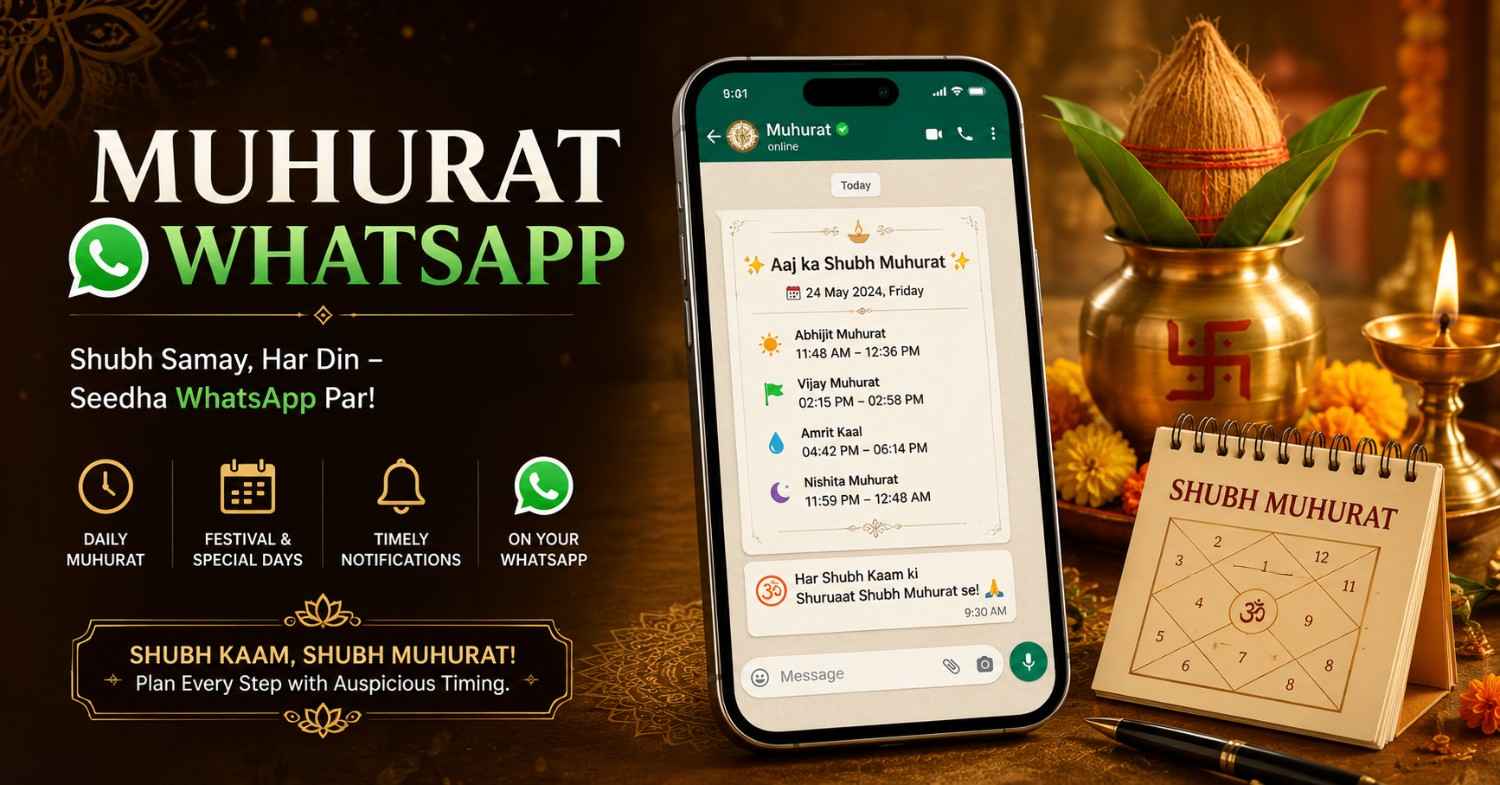
If you're not familiar with the term, Muhurat WhatsApp simply means getting your auspicious timing from an astrology app and forwarding it straight to WhatsApp, where the whole family, the priest, and the wedding planner can actually see it. No paper panchang getting lost under a stack of invitation cards. No misremembering whether it was 5:40 or 5:04.
I'll walk you through what this actually looks like in practice, how an app like Astroly fits into it, and a few things I've noticed people get wrong when they're in a rush to send that message.
So What Exactly Is a Muhurat, and Why Bother With WhatsApp?
A muhurat, if you grew up with this, you already know — it's the auspicious window calculated for something important. A wedding, moving into a new house, starting a business, even buying a car. Get it right, and it's considered a good omen. Get it wrong, or worse, forget to check it entirely, and you'll hear about it from relatives for years.
The WhatsApp part is honestly just practical. Families are scattered now — some in Delhi, some abroad, some who only check messages once a day. A screenshot or a forwarded text sits there waiting for them, unlike a phone call they might miss.
Where This Used to Come From
Not long ago, this meant a visit to the family pandit, or waiting for someone's father to dig out an old printed panchang. It worked, but it wasn't exactly convenient, especially if the ceremony was happening in a different city than where the astrologer lived.
But Accuracy Still Comes First
Here's the thing though — sharing it fast doesn't matter if the timing itself is wrong. I've seen people forward muhurat details copied from some random forwarded chain message, and honestly, you have no idea where that number came from. That's the part worth being careful about.
How Astroly Actually Handles This
Astroly is one of the apps that's built specifically to take that old panchang-and-pandit process and put it on your phone. It calculates muhurat using the Hindu calendar and planetary positions, and it's genuinely quick to use, which matters when you're already stressed about wedding logistics.
Finding a Muhurat in the App
You open Astroly, tell it what the event is — say, marriage, or griha pravesh — and it gives you a set of upcoming dates and time windows that fit. Nothing overly complicated about it.
The Part People Actually Like
Once you've got a date that works, there's a share button right next to it, and yes, WhatsApp is one of the options. Tap it, pick the group or contact, done. I've sent a muhurat to my entire family group in less time than it took to type "checking the date now."
Not Every Muhurat Fits Every Family
One thing worth knowing — Astroly also lets you check timing against your own birth details, not just the general calendar everyone else is using. For something as significant as a wedding date, that personal check tends to matter more than a generic one.
Where People Actually Use This Beyond Weddings
It's easy to assume this is only a wedding thing. It isn't.
Wedding Coordination, Obviously
This is the big one. Wedding planning group chats can have fifteen people in them — parents, siblings, the planner, sometimes even the photographer. Dropping the exact muhurat in there once saves everyone from asking the same question five separate times.
Moving Into a New Home
Griha pravesh timing matters a lot to older family members especially. Sending it ahead of time gives people a real chance to plan when they'll show up, instead of scrambling that same morning.
Opening a Shop or Signing a Deal
A friend of mine runs a small business, and before signing any major contract, his father still insists on checking the muhurat. He just screenshots it and sends it to whoever's involved in the deal. Quick, no drama.
Festival Timings
During Diwali or Navratri, puja timings shift slightly depending on the year and location. A quick WhatsApp message to the family group means everyone's actually doing the puja at the correct hour, not just whenever they remember.
A Few Things Worth Checking Before You Hit Send
Check It Against Your Own Chart When You Can
A general muhurat works fine for smaller things. But for a wedding or something that big, a personalized check based on your kundli is worth the extra minute.
Regional Differences Are Real
Muhurat calculations aren't identical everywhere. A South Indian family and a North Indian family might follow slightly different conventions, so it's worth confirming the app or source matches your family's tradition.
Don't Wait Until the Last Week
Send it out with enough runway that people can actually plan around it. Nobody enjoys booking last-minute flights because the muhurat only got shared five days before the event.
When in Doubt, Ask Someone Who Knows
Apps are genuinely useful, but for the big stuff, it doesn't hurt to have an elder or a trusted astrologer confirm it too. Two sources beats one, especially for a wedding date.
Mistakes I've Seen People Make
Forwarding Random Screenshots
If it came from an unknown forward with no source attached, be skeptical. Stick to something calculated properly, not copy-pasted from who-knows-where.
Forgetting Time Zones
If half your family is in the US or the Gulf, mention the time zone. "5 PM" means nothing without context when people are seven or eight hours apart.
Assuming Everyone Saw It
Group chats move fast. A muhurat sent at 9 AM can get buried by lunch. A quick follow-up asking people to confirm they've seen it isn't overkill — it's just practical.
Letting It Get Lost in the Chat
Pin the message, or save it somewhere separate. You don't want to be scrolling through 200 unrelated messages the night before the wedding trying to find the exact time again.
Wrapping This Up
Muhurat WhatsApp sharing isn't complicated once you've done it a couple of times — it's really just about getting an accurate timing and putting it somewhere everyone can actually see and refer back to. It saves the repeated phone calls, the confusion, and honestly, a fair bit of family stress during an already busy time.
Astroly handles the calculation side properly and makes the sharing part almost effortless. Whether it's a wedding date, a griha pravesh, or just confirming a puja timing during Diwali, it's there on your phone when you need it.
If you want to try it yourself, head to or grab the from the Play Store. Worth having before the next big family event comes around.
A Few Questions People Usually Ask
What does "Muhurat WhatsApp" actually mean? It's just shorthand for getting your auspicious timing from an app and sending it to family or friends over WhatsApp instead of explaining it over the phone.
Can I trust the timing that gets shared this way? Depends entirely on where it came from. If it's calculated by a proper app like Astroly using actual Vedic methods, it holds up. Random forwards, less so.
Does Astroly give a timing based on my own birth details? Yes — you can check muhurat against your personal chart, which tends to be more relevant for something big like a wedding.
Is Astroly free? The core features are free to use. You can download it and check for yourself.
Can I send it to a whole group at once? Yes, it shares directly to any WhatsApp contact or group, no extra steps involved.
Why does the time zone matter? Because a "5 PM" muhurat means something completely different to a relative sitting in Dubai or New Jersey. Always spell it out.
A Quick Note on Who Put This Together
This piece was put together by the Astroly content team, with input from Vedic astrology consultants who work on muhurat and panchang calculations regularly. The underlying timing logic follows traditional Hindu calendar and astronomical methods used across Indian households for generations.
That said, treat this as helpful guidance rather than the final word — for something as significant as a wedding date, it's still worth running it past a family astrologer or priest who understands your specific regional customs.
A couple of places to look further: