Introduction
A friend of mine texts me every morning with the same question: "did you check your horoscope yet?" She swears by it. Her sister thinks it's nonsense. So which one of them is right?
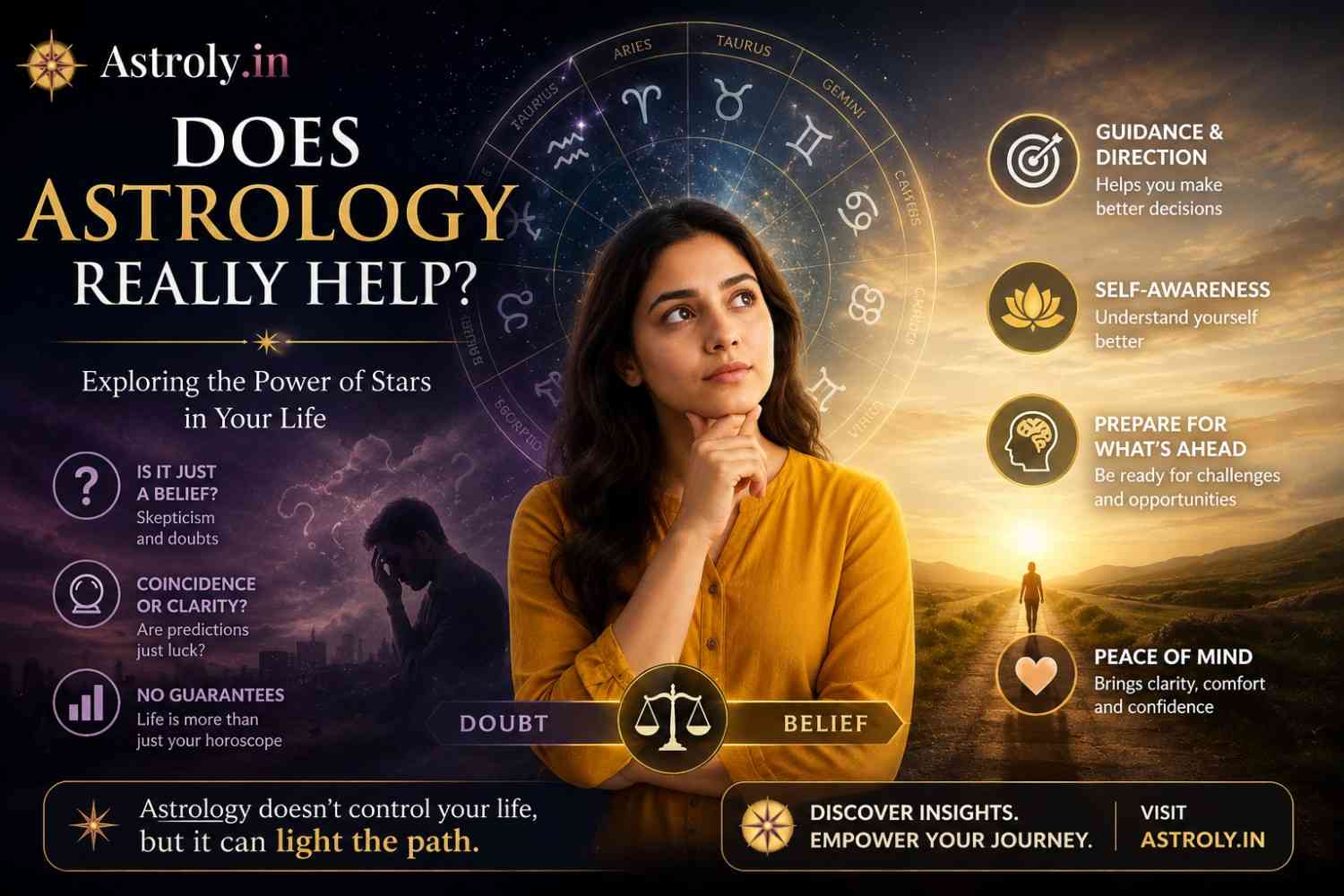
Does astrology really help, or is it just something we tell ourselves to feel better? I get asked this a lot, both as an astrologer and honestly, as someone who's skeptical by nature. So I want to answer it properly this time, no fluff, no "the stars know all" nonsense.
Short version: astrology probably won't predict your future. But it might still be doing something useful for you, and that's worth understanding before you write it off or lean on it too hard. Let's get into it.
If you want to try it out yourself while you read, the is free to download and gives you a proper, personalized chart rather than a generic sun-sign guess.
What Happens When You Actually Test Astrology
Here's the thing people don't like to hear: astrology has been tested. More than once.
The Famous Nature Study
Back in 1985, a physicist named Shawn Carlson ran a genuinely fair test. He had professional astrologers try to match birth charts to the correct personality profiles, out of a lineup, with real people. They couldn't do it any better than random guessing. This got published in Nature, which isn't exactly a magazine that publishes flimsy stuff.
So Why Does It Still Feel So Accurate?
This part's interesting. There's a well-documented quirk in psychology called the Barnum effect (some call it the Forer effect, after the guy who first demonstrated it). Basically, if you give someone a vague, flattering description and tell them it's "just for them," they'll swear it's spot on. Even if you handed the exact same paragraph to everyone in the room.
That's a big chunk of why horoscopes feel eerily personal. It's not always the planets. It's the writing.
Okay, But Does It Actually Help Anyone?
Yes, actually, just not in the way most people assume.
It Gives You a Reason to Pause
I've noticed this with clients constantly. Someone reads about a rough transit or a "Saturn return," and instead of ignoring their problems, they actually sit with them for a minute. That pause matters more than the astrology behind it, if I'm honest.
It Shows Up More When Life Feels Out of Control
There's a study from the Journal of Consumer Research (2020) that found people reach for horoscopes and fortune-telling more during stressful, uncertain periods, layoffs, breakups, that kind of thing. Makes sense. When you can't control much, a little structure helps, even a symbolic one.
It Can Become a Small, Grounding Habit
Some of my clients check their chart the same way others check the weather or journal before bed. It's less about believing every word and more about the ritual of checking in with yourself.
What About Love and Career Decisions?
This is where I have to be blunt with people, because I've seen it go wrong.
Compatibility Charts Are Fun Conversation Starters
Comparing birth charts with a partner won't scientifically predict if you'll last. But it does often start conversations neither of you would've had otherwise, about communication, values, what annoys you. That's genuinely useful, just not for the reason people think.
"Good Year for Career Changes" Is a Prompt, Not a Guarantee
If your chart says this is your year to switch jobs, treat that as a nudge to actually evaluate whether you're happy at work. Don't treat it as permission to quit without a plan. I've had to say this to more than one client.
Please Don't Skip the Doctor or the Financial Advisor
I say this as someone whose literal job is astrology: don't make big medical or money decisions based on a horoscope alone. Use it alongside real advice, not instead of it.
How to Actually Get Value Out of Astrology
If you're going to use astrology, here's how to not get burned by it.
Think of It as a Mirror, Not a Map
The people who get the most out of astrology use it to notice patterns in themselves. The ones who get disappointed are usually looking for a map that tells them exactly what to do next. It was never built for that.
Get a Real Chart, Not a Generic One
A sun-sign horoscope in a newspaper is calculated for roughly a twelfth of the entire planet. It's about as personalized as a fortune cookie. A proper birth chart uses your exact birth date, time, and location. That's the difference between reading your coffee grounds and reading your actual coffee grounds, so to speak. Apps like calculate this properly instead of lumping you in with everyone born under Leo.
Be Picky About Where You Get It From
Vague predictions that could apply to literally anyone are a red flag. Good astrology, or at least honest astrology, explains its reasoning: which transit, which house, why it matters.
Why Astrology Isn't Going Anywhere in 2026
I'll admit, even I'm a little surprised by how much this has grown, especially with younger crowds.
It's Just... Convenient Now
You used to have to book a session or wait for the newspaper horoscope. Now it's a notification on your phone before breakfast. That accessibility alone explains a lot of the growth apps like Astroly have seen.
It Sits Comfortably Next to Therapy and Journaling
Nobody I know treats astrology as a replacement for therapy anymore. It's more like one more tool in the self-care drawer, next to meditation apps and gratitude journals. That's honestly a healthier way to use it.
It Gave Us a Shared Vocabulary
"Mercury retrograde" has basically become shorthand for "everything's going wrong today," even among people who don't believe in astrology at all. Whatever you think of it, that's a pretty impressive cultural footprint for something that started with ancient stargazers.
Frequently Asked Questions
Does astrology really help with anxiety? Sort of, indirectly. It tends to give people a sense of structure during uncertain times, which some find calming. It's not a replacement for therapy or professional mental health support, though.
Is there any actual science behind astrology? Controlled tests, including a well-known one published in Nature, haven't found evidence that astrologers can predict personality or events better than chance would. The benefit people report seems to be psychological, not predictive.
Can astrology help me make better decisions? It can help you slow down and reflect, which is genuinely useful. But the actual decision should rest on facts, professional advice, and your own judgment, astrology works best as a supporting voice, not the deciding one.
Is a sun-sign horoscope as accurate as a full birth chart? No, not even close. A full birth chart uses your exact birth date, time, and place, which makes it far more specific than a general sun-sign reading that applies to millions of people.
Is the Astroly app free? Yes, Astroly offers free daily horoscopes and personalized charts. You can grab it on the .
So, Does Astrology Really Help?
Here's where I land, after years of doing this professionally and still asking myself the same question: astrology hasn't been proven to predict your future. That part's settled, at least scientifically.
But it does seem to help people slow down, reflect, and feel a bit more grounded during messy periods. That's not nothing. It's just not magic, either.
Use it the way you'd use a good journal prompt: take what's useful, leave what isn't, and don't hand it the keys to your big life decisions.
Curious what your own chart actually says? Head to or grab the and take a look for yourself.