Introduction
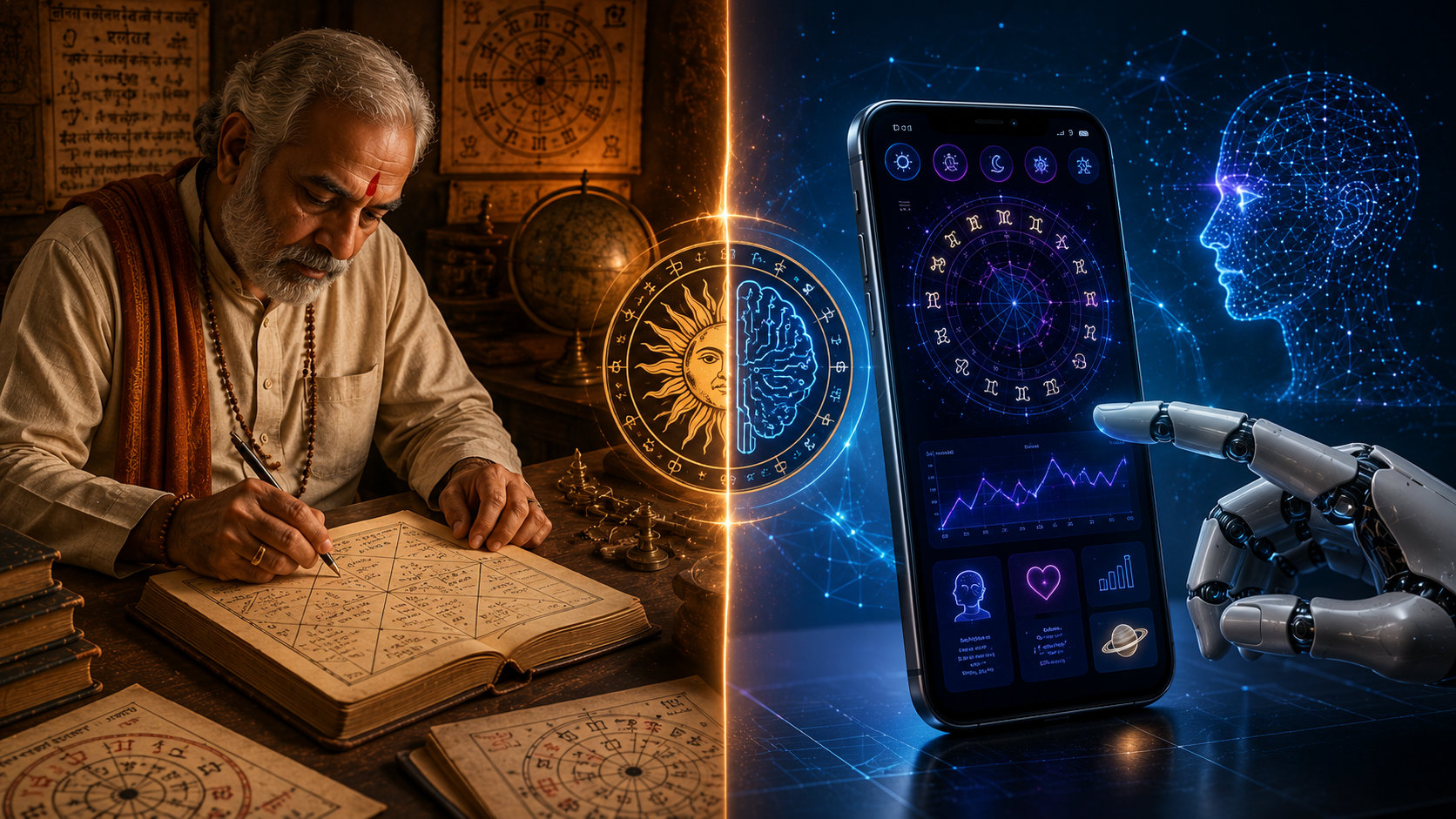
My grandmother never made a single important decision without consulting her astrologer first. Marriage, travel, buying land—everything went through Pandit Ji. He lived two streets away and kept a worn-out notebook full of everyone's birth charts. She trusted him completely.
That world still exists. But it's changing fast.
In 2026, the best AI astrology app doesn't live two streets away. It lives inside your phone. And honestly? What it can do would surprise even Pandit ji.
I've spent time exploring what's out there—and the gap between a serious Vedic platform and a random "check your sun sign" app is enormous. If you're looking for the best AI astrology app of 2026 that actually understands Jyotish—not just pop astrology—this article is for you. We're talking about platforms built on real shastra, real planetary math, and real personalization.
Astroly.in is the one that kept coming up. It's built specifically for Indian users, runs on classical Vedic principles, and feels nothing like the Western astrology apps that dominate global app stores.
Let me walk you through why that matters—and what to actually look for before you trust any app with something as personal as your kundli.
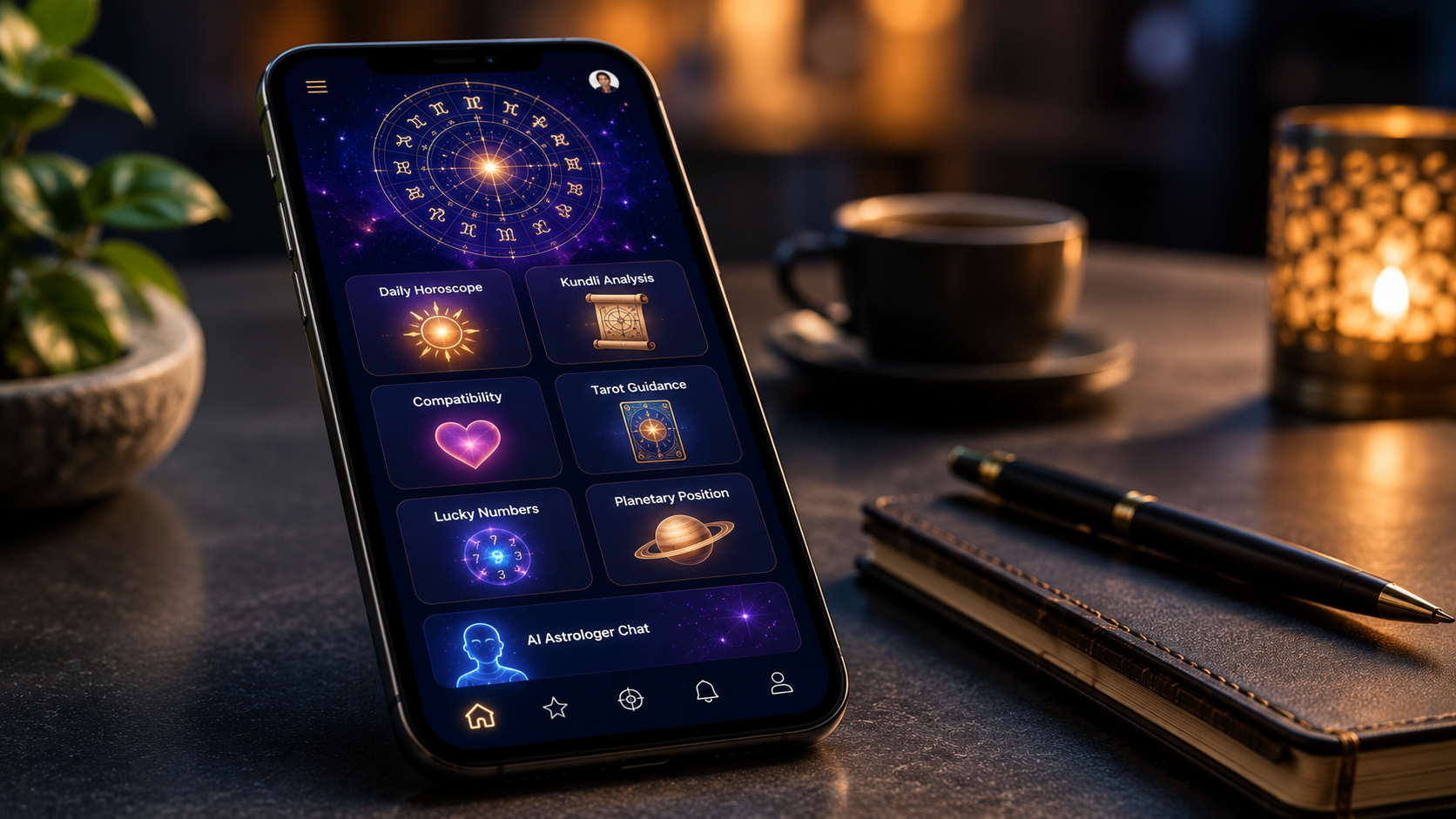
The Real Problem With Astrology Apps Nobody Talks About
Here's something most "best astrology apps" articles won't tell you: the majority of astrology apps are not doing Jyotish at all.
They're doing Western astrology—a tropical zodiac, sun sign focus, planetary houses calculated using a system that doesn't match the Vedic framework your family has followed for generations. You open the app, enter your birthday, and get a "Scorpio" reading. But in Vedic Jyotish, you might be a Tula (Libra) Lagna with a Karka (Cancer) Moon. Completely different picture.
This isn't a minor technical detail. It changes everything about the prediction.
Why Most Indians End Up With the Wrong App
The problem is visibility. Western astrology apps have bigger marketing budgets. They rank higher on app stores. They have slicker interfaces. So when someone searches for an astrology app, that's usually what they find first.
Then they use it for a few weeks, the predictions feel off, and they assume "AI astrology doesn't work." But the tool was simply wrong for the tradition.
What Vedic Jyotish Actually Requires
A genuine Jyotish app needs to
Use the sidereal zodiac (not tropical). Calculate your Lagna—your ascendant, the actual rising sign at the moment of your birth. Give weight to your Moon sign (Rashi), which is far more important in Vedic astrology than your sun sign. And work with the Vimshottari Dasha system—the planetary period system that shows which planet is actively influencing your life right now.
Without these four elements, what you're getting is not Jyotish. It's entertainment.
What Astroly Gets Right From the Start
The first thing I noticed about Astroly was what it didn't do. It didn't ask for my sun sign. It didn't offer me a "quick compatibility check" based on star signs. It asked for my birth date, exact birth time, and birth location — and it meant it.
That's how every serious Jyotish consultation begins. Birth time matters down to the minute, because your Lagna can change every two hours.
The Kundli Is Actually Correct
Astroly generates a complete Janma Kundli using Swiss Ephemeris—the same astronomical calculation engine used by serious astrology software worldwide. The planetary positions are mathematically accurate.
What you get isn't just a D1 chart. You get:
The Navamsa (D9)—which experienced astrologers always check alongside D1, especially for marriage predictions. The Dashamsa (D10) for career clarity. And the full set of divisional charts for anyone who wants to go deeper.
Most free apps only show you D1 and call it a full kundli. It isn't.
It Explains; It Doesn't Just Display
Here's where AI actually adds value. A chart full of planetary symbols is useless to someone who didn't study Jyotish for years. Astroly translates the chart into plain language—explaining what Saturn in the 7th house means for your specific Lagna, not in isolation, but in context of the full chart.
That interpretive layer—the "so what does this actually mean for me?" part—is what most apps completely skip.

Features That Make a Genuine Difference
I want to be specific here, because lists of features are easy to fake. These are the ones that actually matter in daily use.
Dasha Predictions Tied to Your Chart
The Vimshottari Dasha system divides your life into planetary periods. Right now, you're under the influence of a specific Mahadasha planet—and within that, an Antardasha sub-period. These periods shape everything: your energy, your opportunities, your challenges.
Astroly shows your current dasha and sub-dasha—and crucially, it tells you what that combination historically indicates based on your chart. If you're in Saturn Mahadasha with Venus Antardasha, and Saturn is your 5th lord placed in the 10th house, the guidance will reflect that specific combination. Not a generic Saturn description.
That specificity is what makes it feel like a real consultation.
Muhurat Finder — For When Timing Actually Matters
Indians understand muhurat intuitively. You don't start construction on a Tuesday if the Panchang doesn't support it. You don't set a wedding date without checking planetary positions.
Astroly's Muhurat Finder looks at your specific kundli alongside the Panchang and current transits. It identifies windows where planetary conditions align with your personal chart—not just generically auspicious days.
This alone makes it worth using before any major decision.
Kundli Milan With Actual Depth
The 36-guna matching system is the starting point—not the end point. Experienced astrologers know that a couple with 28 matching gunas can still face serious problems if there's an unchecked Nadi Dosha or Bhakoot incompatibility.
Astroly goes through all of it. It flags doshas, explains their implications, and tells you what remedies are traditionally recommended. You get an honest picture—not just a reassuring number.
Can You Actually Trust AI for Something This Personal?
This is the question people don't ask out loud but definitely think about.
Here's my honest take: AI does some things better than a human astrologer. And some things it genuinely cannot replace.
Where AI Has a Clear Advantage
Speed and consistency. An AI doesn't get tired at the end of a long day and give you a rushed reading. It applies the same rules to your chart at 2am as it does at 2pm. For calculations—Dasha periods, planetary positions, house lords, and aspects—AI is actually more reliable than manual calculation.
It also doesn't have personal biases. Some traditional astrologers unconsciously give more favorable readings to certain clients. AI doesn't do that.
Where Human Expertise Still Wins
Complex, layered interpretations — where a very specific life situation intersects with unusual planetary combinations — still benefit from an experienced human eye. Especially for once-in-a-lifetime decisions.
The honest answer is use Astroly for regular guidance, daily checking, muhurat planning, and understanding your kundli. For truly major crossroads in life—consult both. Use the AI to understand your chart first, then bring that knowledge into a conversation with a trusted practitioner. You'll have a far better consultation because you'll actually understand what they're talking about.
On Privacy
Your birth data—date, time, and location—is genuinely personal. In the Indian context especially, this information is culturally significant. Astroly handles this data with clear privacy protocols and doesn't sell or share it. That matters.
Who Is Astroly Actually For?
Not everyone needs the same thing from an astrology app. Here's where Astroly genuinely shines:
People Who Already Know Some Jyotish
If you grew up hearing about dashas and rashis and you have a rough idea of your own kundli, Astroly will feel immediately comfortable. It speaks the same language. It doesn't simplify things to the point of uselessness.
Young Professionals Navigating Career Decisions
The 10th house in Jyotish governs career, reputation, and professional life. The current dasha planet's relationship to your 10th lord can tell you a lot about whether this is a period for pushing forward or consolidating. Astroly makes this analysis accessible—without requiring years of study.
Families Navigating Marriage Alliances
This is probably the highest-stakes use case. Kundli Milan done properly—not just a guna count, but a full dosha check and compatibility reading—requires careful analysis. Astroly handles this rigorously and in a way families can actually understand and use.
Daily Panchang Users
If you check the Tithi, Nakshatra, Yoga, and Karana every morning—Astroly gives you a personalized daily Panchang filtered through your own chart. Some Nakshatras are more significant for you personally based on your Janma Nakshatra and Lagna. Astroly reflects that.
Why This Moment Matters for Indian Astrology
There's something larger happening here. Jyotish has always been part of Indian life, but access to good Jyotish guidance has historically been unequal. If you grew up in a family with a trusted family astrologer in a big city, you had access. If you grew up in a smaller town or moved to a different state, finding someone genuinely knowledgeable was harder.
AI changes that equation. A farmer in rural Rajasthan and a software engineer in Bengaluru can now access the same quality of Vedic chart analysis. That democratization is genuinely significant.
Astroly is part of that shift. It's not trying to replace the tradition—it's trying to carry it forward into a form that works for how India lives today.

Conclusion
My grandmother's Pandit Ji and his worn notebook served their purpose beautifully. But he's not available at midnight when you're lying awake wondering if this is the right time to make a major move. He can't instantly cross-reference six divisional charts to answer a specific question. And he definitely doesn't send you real-time transit alerts when Jupiter changes signs.
The best AI astrology app 2026 doesn't compete with that relationship. It fills the space around it—the everyday questions, the timing checks, and the self-understanding that comes from actually knowing your own chart.
Astroly.in does this well. It's honest about what it is, accurate in its calculations, grounded in classical Jyotish, and built with Indian users genuinely in mind.
Jyotish ab aapki ungliyon mein hai — aur pehle se kahin behtar roop mein.
If you haven't explored your kundli yet, start today. Go to it, enter your birth details, and spend some time with your chart. What you find might genuinely surprise you.
People Also Ask: Your Questions Answered
Q1. Is the best AI astrology app in 2026 actually based on Vedic Jyotish or Western astrology?
This depends entirely on the app. Most globally popular astrology apps use Western astrology—tropical zodiac, sun sign focus. Astroly.in is specifically built on Vedic Jyotish—sidereal zodiac, Lagna-based analysis, and the Vimshottari Dasha system. For Indian users seeking authentic Jyotish, the distinction is critical.
Q2. How accurate are AI kundli readings compared to a human astrologer?
For mathematical accuracy—planetary positions, house calculations, and dasha periods—AI is extremely precise. For interpretive nuance in complex life situations, experienced human astrologers still add value. A good approach is using an AI platform like Astroly for regular guidance and bringing a clearer understanding of your chart to human consultations when needed.
Q3. What birth details do I need to use Astroly?
You need your date of birth, exact time of birth (as precise as possible—check your birth certificate), and place of birth. Birth time accuracy matters a lot in Vedic Jyotish because your Lagna (ascendant) can change every two hours.
Q4. Can Astroly help with Kundli Milan for marriage?
Yes. Astroly performs full Ashtakoot Guna Milan (36-point system) and checks for important doshas, including Mangal Dosha, Nadi Dosha, and Bhakoot—with interpretations, not just raw scores. This gives families a meaningful basis for discussion.
Q5. Is my personal data safe with an AI astrology app?
With Astroly, yes. The platform has clear data privacy policies and doesn't share or sell your birth data. Given that birth date, time, and location are culturally significant in India, checking privacy policies before using any astrology app is always a smart move.
Q6. Does Astroly work in Hindi?
Yes. Astroly supports Hindi alongside English, making it genuinely accessible for users across India who prefer reading guidance in Hindi.
Q7. What is Swiss Ephemeris, and why does it matter?
Swiss Ephemeris is the most accurate astronomical calculation system available for determining planetary positions. Astroly uses it to generate charts, which means the foundation of every prediction—the actual planetary positions—is mathematically correct. This matters enormously for prediction accuracy.
Q8. Is Astroly free or paid?
Astroly offers a free tier that includes Janma Kundli generation and basic chart analysis. More detailed reports — including extended dasha analysis, Muhurat Finder, and comprehensive Kundli Milan — are available through premium features. Visit for current details.
Q9. What makes 2026 different for AI astrology apps?
AI models trained on classical Vedic texts have become significantly more sophisticated. They now understand planetary combinations (yogas) and contextual interpretation (not just individual planet meanings) and can provide remedies tied to specific chart configurations—not generic suggestions. The gap between 2020-era astrology apps and current platforms is substantial.
Q10. Can I use an AI astrology app for daily guidance?
Absolutely—and this is one of the strongest use cases. Daily Panchang, transit alerts, and personalized guidance for the day based on your chart and current planetary positions are all practical, regular uses where Astroly adds genuine value.