Introduction
I've watched too many people get talked into buying a "powerful" gemstone that was, honestly, junk dressed up in a nice box. That's exactly why an honest astrological gemstone name list by quality, color, and value matters more than most people realize.
Here's the thing nobody tells you upfront: Two rubies can look almost identical and still be worlds apart in price. It's a few thousand rupees. The other's a few lakhs. The difference comes down to quality, the exact shade of color, and how the trade actually values these things—not marketing.
So let's go through it properly. Which planet needs which stone, what "good color" actually looks like, and how pricing really works once you strip away the sales pitch. By the end, you'll be able to walk into a jeweler's shop and ask the right questions instead of just nodding along.
And if you'd rather have this tailored to your actual birth chart instead of general advice, the Astroly app does that—it's worth downloading before you spend real money on a stone.
Quality Grades: The Part Most People Skip
Everyone asks, "Which gemstone should I wear?" Almost nobody asks, "What quality should I wear?" That's a mistake, because quality is what determines whether a stone actually does anything.
Fine Quality
Think excellent clarity, strong natural color, and barely any visible inclusions. Little to no treatment. These are the stones serious astrologers recommend for real remedial work—and yes, they cost the most.
Standard Quality
A bit more visible inclusion, maybe a lighter color, possibly treated to enhance appearance. Perfectly fine for most people, honestly. Not everyone needs a museum-grade emerald.
Commercial Grade
Heavily treated, sometimes dyed, full of inclusions. Cheap for a reason. I'd steer clear of these if you're buying specifically for astrological purposes—a weak stone is believed to give weak results, and that's the whole point of wearing one.
One habit that'll save you a lot of regret: always ask for a certificate—GIA, IGI, or GJEPC. If a seller hesitates, that tells you something.
What Color Actually Means, Planet by Planet
Color isn't decoration here. In Vedic astrology, each planet has a color signature, and the stone is supposed to match it.
Red Tones—The Sun
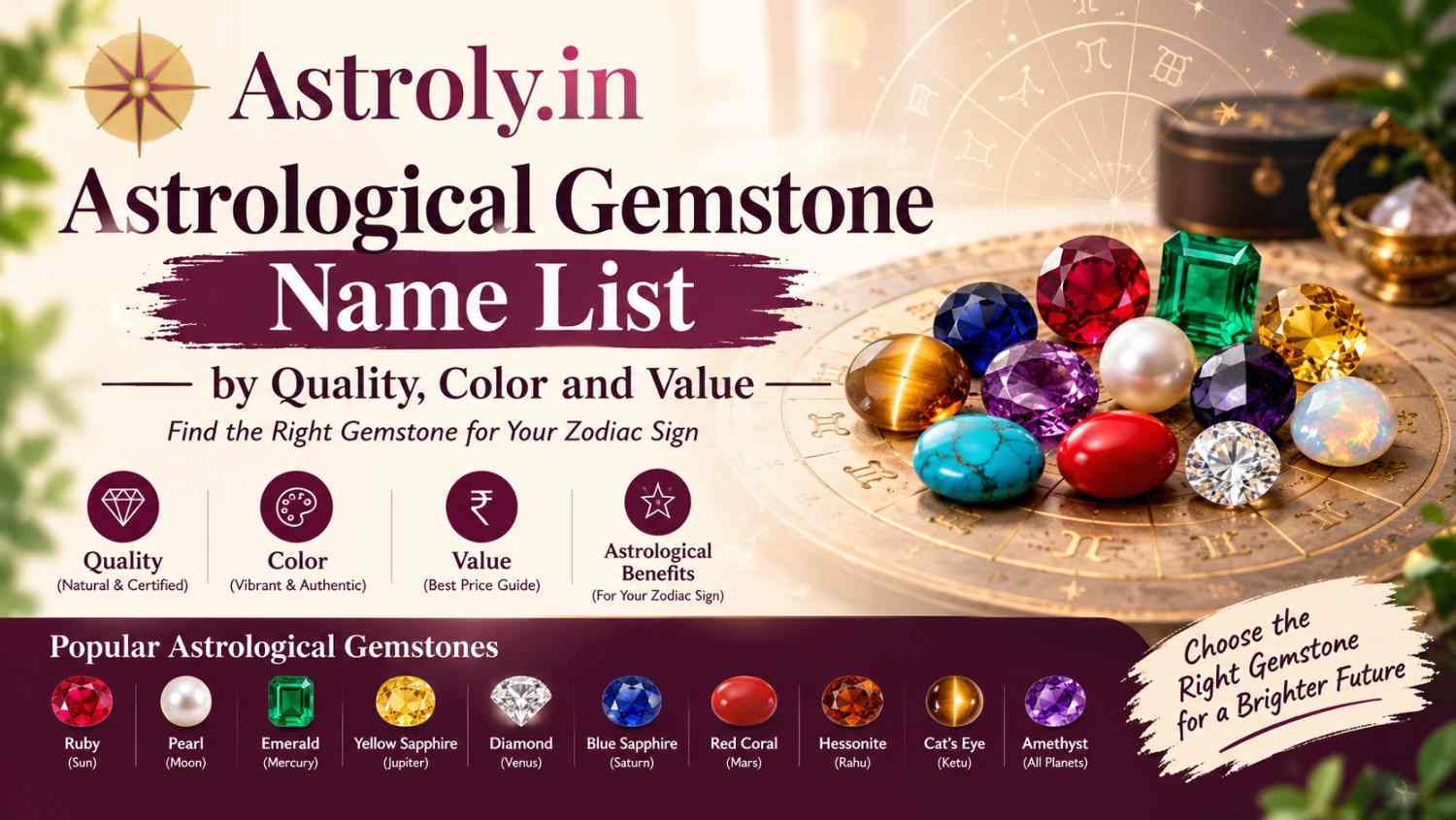
Ruby (Manik) is the Sun's stone. The gem trade calls the best shade "pigeon-blood red" — deep, saturated, almost glowing. Pink sapphire works as a lighter, more affordable stand-in.
Golden Yellow — Jupiter
Yellow Sapphire (Pukhraj) should be a clean, even golden-yellow. If it leans green, that's usually a lower grade or a different stone entirely.
Blue—Saturn
Blue Sapphire (Neelam) is the one everyone's a little scared of, and fairly so—it acts fast, for better or worse. Cornflower and royal blue are the top shades. Don't buy this one on impulse.
White and Green — Venus and Mercury
Diamond (Heera) covers Venus; Emerald (Panna) covers Mercury. Clear, colorless diamonds and vivid green emeralds (minor inclusions are normal, even in good ones) sit at the top.
The Rest—Mars, Rahu, Ketu
Red Coral (Moonga) for Mars wants a deep orange-red. Hessonite (Gomed) for Rahu should be honey-brown. Cat's Eye (Lehsunia) for Ketu is valued for that sharp, moving light band down the center—the "eye."
Navratna Pricing: What Drives the Numbers
People assume gemstone prices are arbitrary. They're really not—a few specific factors decide almost everything.
The Expensive End
Ruby, blue sapphire, and emerald sit at the top of the price ladder. Origin matters a lot here—Burmese rubies, Kashmir sapphires, and Colombian emeralds carry serious premiums over stones from elsewhere.
The Middle Ground
Yellow sapphire, pearl, and diamond fall here. Ceylon yellow sapphires are more wallet-friendly than Burmese ones. Cultured pearls cost far less than natural South Sea pearls.
The Accessible Options
Red coral, hessonite, and cat's eye won't break the bank. Italian coral and Sri Lankan hessonite, or cat's eye, are generally considered the benchmarks for quality at this price point.
Keep in mind—these prices move. Origin, treatment, carat weight, and demand shift constantly, so what you paid last year isn't necessarily today's rate.
Making Sure You're Not Getting Scammed
This is the part I'd tell a friend, not just a reader.
Get It Certified
A lab certificate tells you if the stone's natural, where it's from, and what's been done to it. Skip this and you're basically trusting a stranger's word on a purchase that could cost lakhs.
Understand Treatments Aren't Automatically Bad
Heated, oiled, dyed—these are normal in the trade and totally legal, as long as they're disclosed. What's not okay is a seller hiding it. An untreated stone of equal quality will always cost more.
Check It Against Your Actual Chart
Here's what a lot of gem sellers won't mention: the "right" stone depends on your ascendant, your planetary strength, and your current dasha—not just your sun sign. Generic advice can lead you to the wrong gemstone entirely.
This is exactly where a proper astrology app helps. The Astroly app looks at your actual birth chart before suggesting a stone, instead of giving you a one-size-fits-all answer.
So, Which One Should You Actually Buy?
Break it down into four simple steps and this stops being overwhelming.
Step 1—Find the Weak Planet
Your chart will show which planet needs support. That decides your gemstone category before anything else.
Step 2 — Decide Your Budget Honestly
A certified standard-quality stone beats an uncertified "premium" one every single time. Don't let budget push you toward something fake.
Step 3 — Buy From Someone Verifiable
Certified jewelers, verified platforms, and real return policies. If none of those exist, walk away.
Step 4—Double-Check Before You Commit
Cross-reference the recommendation against your specific chart one more time. Small chart differences change what's actually right for you.
Final Thoughts
Working through an astrological gemstone name list by quality, color, and value really comes down to three questions: Is it genuine? Is it the right color for your planet? And is the price fair for what you're actually getting?
Premium stones cost more, but they carry more weight astrologically. Standard-quality stones are a completely reasonable choice for most people. Just don't compromise on certification, whatever your budget.
And remember—the right gemstone for you isn't the one trending on social media. It's the one that matches your chart.
If you want that kind of personalized read instead of general advice, download the Astroly app. It'll walk you through your birth chart and suggest gemstones that actually fit your planetary positions—plus daily horoscope updates so you're not making these decisions blind. Visit astroly.in or grab it on Google Play.
FAQs
Is a more expensive gemstone always better astrologically?
Not necessarily. A certified standard-quality stone that matches your chart correctly will usually outperform an expensive stone that's the wrong fit for your planetary needs.
Can color alone tell me if a gemstone is genuine?
No. Color is one clue, but synthetic and treated stones can mimic natural color convincingly. Certification is the only reliable check.
Why do prices vary so much for the "same" gemstone?
Origin, treatment, clarity, and carat weight all shift the price—sometimes dramatically, even between two stones that look nearly identical to the naked eye.
Should I trust a seller who says "no certificate needed"?
Be cautious. Reputable sellers generally welcome certification because it protects both of you. Hesitation is a red flag worth taking seriously.
How often should I recheck if my gemstone still suits me?
Major life changes or a new dasha period are good moments to reassess. Apps like Astroly make this easy to check without booking a full consultation each time.